Get Full Government Meeting Transcripts, Videos, & Alerts Forever!
Get email alerts on the Public Safety topic
No spam. Unsubscribe anytime.
Eldridge City Council and volunteer fire department debate $400,000‑plus funding gap, weigh hybrid model
Summary
At a July 13 special meeting, Eldridge City Council and volunteer fire representatives reviewed competing budgets and operational plans after the department voted to remain independent; participants discussed finishing living quarters, hiring a full‑time administrator or chief, and a hybrid option that would keep volunteers while shifting capital oversight to the City.
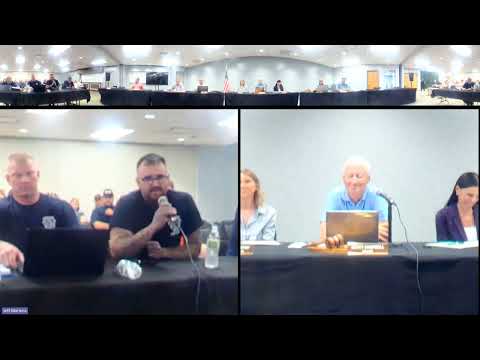
Eldridge City — The Eldridge City Council met July 13 to discuss the future of fire protection and EMS services after the volunteer Eldridge Volunteer Fire Company voted to remain independent and asked the City to increase funding.
"The only item on our agenda tonight is the discussion of the future of fire protection and EMS services in the city of Eldridge," the council chair said as the meeting opened. Council members and fire representatives traced negotiations back to April and described months of stalled talks and mounting volunteer burnout.
Fire representatives told the council their proposed full budget runs in the high six figures and that the department had recently requested roughly $766,000 per year from the City, while the City had already certified roughly $364,000 in its fiscal plan. Council members also recalled an earlier, ‘‘bare‑bones’’ departmental budget figure of $476,000 presented during prior talks. The department said the larger request reflects both operating needs (hiring a full‑time chief/administrator) and capital costs (finishing living quarters upstairs and replacing aging apparatus).
"The other big piece of the capital allocation is replacement of rigs... our Rescue Squad truck is probably one of the oldest and is likely the next one due for replacement based off of NFPA guidelines," a fire representative said, explaining why apparatus replacement drove much of the capital total. The same representative added that finishing living quarters at the station would make it feasible for out‑of‑town volunteers to stay on shift and that doing so helped some nearby towns nearly double membership.
The department described measurable recruitment goals: it said current membership stood at about 20 and the aim would be to reach nearer 30 members, boosting turnout per call as the key metric of improved service. "If we look at our budget today, we don't have a full‑time person... That is to combat the burnout," one representative said.
Council members pressed for specificity on how money would translate into measurable gains. "If more money goes to this, what's the result? How are we going to get from where we are today to our goal of X number of new firefighters?" a council member asked, urging a pro forma plan tying budget items to recruitment and retention targets.
Both sides agreed on two common themes: the volunteers are essential to keeping costs down and finishing the station’s upstairs living quarters would materially aid recruitment. The department said a straw poll of members after the vote indicated roughly 50% would not continue if the City fully absorbed the department, raising retention risks. "Losing half the staff means... we’re having to step up and their turnout gear, all the numbers would only escalate," a department representative said.
That concern led several council members to push a hybrid option: the City would fund and own capital assets and handle fiscal oversight while the volunteer company would retain operational control of volunteers and on‑call staffing. "There may be some world where the actual physical capital assets are managed by the city and the labor allocation is managed by the volunteer company so that we remain the autonomy of our chosen leadership," a department representative suggested.
Council members said they could not commit to a multi‑year contract that pledged undefined future appropriations beyond the mayor and current council’s fiscal authority; staff explained the City’s budget process requires annual approvals and that capital plans can be proposed and approved year to year. The clerk noted existing revenue streams, including property tax contributions and a gas franchise fee split the council already adopted.
No formal funding decision was made. The chair said the matter would be brought to the regular full council meeting for further consideration and that staff and the department should continue to meet to rebuild trust and produce a clear, realistic plan. A fire representative urged the City to come to the table with a pragmatic proposal: "Come to the table with a plan that's realistic. The answer can't just be to say no to the plan that we've tried to put out there."
Council agreed to return the item to the next regular meeting for additional work on a path forward that could include finishing station living quarters, hiring an administrative lead (city employee or contracted position), and further discussion of a hybrid governance model.
The council adjourned without taking any binding vote on funding for the department.