Get Full Government Meeting Transcripts, Videos, & Alerts Forever!
Get email alerts on the CDBG topic
No spam. Unsubscribe anytime.
Clay County holds first public hearing on 2026–2030 CDBG consolidated plan; commissioners question sidewalk emphasis and affordable-housing options
Summary
Officials presented a draft five-year CDBG consolidated plan and a 2026 annual action plan allocating an estimated $1,057,772 from HUD in year one (about $634,663 to infrastructure). Commissioners and public urged clarity on sidewalk prioritization and whether tiny-home or affordable-housing projects could be funded; staff said tiny-home communities are allowable but some changes would require a substantial amendment.
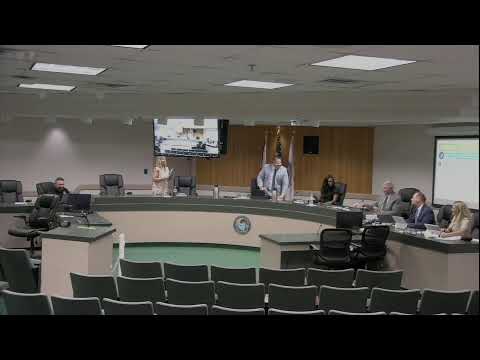
At a July 14 public hearing the Clay County grants office presented the draft Community Development Block Grant (CDBG) consolidated plan for 2026'0230 and the draft annual action plan for 2026, outlining proposed allocations and soliciting public input.
Jody Heisler, Clay County grants compliance manager, said the five-year consolidated plan favors countywide flexibility and aligns proposed national objectives with the county strategic plan. The proposed allocation percentages over five years are infrastructure 60%, parks and public facilities 25%, community partnerships and nonprofit expansion 10%, and administration 5%.
For year 1, Heisler said the HUD award estimate is $1,057,772 and the draft annual action plan proposes $634,663 for infrastructure, $105,777 for parks, $105,777 for community partnerships/nonprofit expansion, and $52,889 for administration.
Several commissioners voiced concern about the apparent emphasis on sidewalks, particularly in areas that already have sidewalks or where sidewalks would benefit some districts but not others. One commissioner urged broader geographic distribution and recommended keeping nonprofit-expansion funding open to competitive application rather than naming specific nonprofits in the annual plan.
Commissioners and board members also asked whether CDBG funds could be used for affordable housing or tiny-home communities. Heisler said tiny-home communities are an allowable expense under CDBG and that funding could cover site preparation, utilities, septic or sewer work, and construction; she cautioned that moving from infrastructure to construction would likely require a substantial amendment to the annual action plan.
Public comment included a request from a Veterans Council representative to prioritize community facilities and nonprofit capacity building to better serve veterans and caregivers.
The board took no final vote at the first hearing; staff said public comment remains open through July 18 and that the second public hearing (with any recommended edits) and a vote are scheduled for July 28.
Key next steps: staff will consolidate public comments and survey results, revise the draft to reflect board direction (including removing named nonprofits from the annual plan if requested), and return the plan for a final public hearing and vote.