Get Full Government Meeting Transcripts, Videos, & Alerts Forever!
Get email alerts on the Capital Planning topic
No spam. Unsubscribe anytime.
Osceola adopts five‑year CIP, board stresses grant/TID strategy for big projects
Summary
The board adopted resolution 24‑11 approving a 2024–2029 capital improvement plan, but members emphasized that major projects (Cascade Falls stairs, River Street/3rd Ave reconstruction) are contingent on outside funding and recommended clearer budget scenarios before spending decisions.
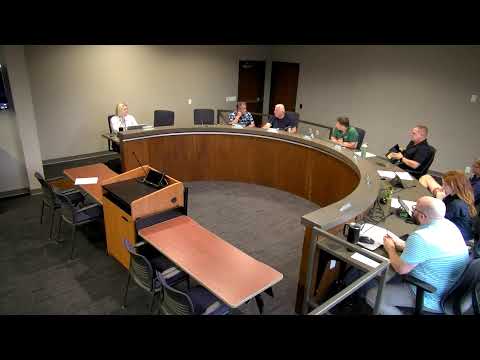
The Village of Osceola voted to adopt its five‑year capital improvement plan (resolution 24‑11) after a presentation highlighting that several large projects exceed the village's annual borrowing baseline and will require external financing. Drew (speaker 6), who presented the plan, described the CIP as a living document that helps staff and elected officials prioritize work and pursue funding opportunities.
Drew noted that "when there's a project that exceeds the yearly borrowed budget... there's gonna have to be some other financial source," and walked the board through examples: an estimated $1.4 million for Cascade Falls stairs (half previously grant‑funded) and a roughly $1,000,000 reconstruction estimated for River Street and 3rd Avenue. Board members pressed for budget scenarios showing how large projects would align with the planned borrow, DNR loans or TID revenue before moving forward with construction.
Devin (speaker 4) and Drew described possible funding combinations: DNR clean‑water loans for utility components, tax increment financing to capture incremental growth, and grant opportunities. The CIP presentation also highlighted that some projects carry an asterisk indicating they are conditional on funding; the board discussed using TID strategy and pursuing the LRIP and other grants to make a large project feasible.
What the board decided
The board adopted resolution 24‑11 by voice vote and directed staff to continue pursuing grants and to present clearer budget scenarios for any large, contingent projects. The plan will guide budgeting workshops scheduled for September–November and inform the 2026 biannual borrow cycle.
Why it matters
Adopting the CIP gives the village a roadmap for capital spending and strengthens grant applications (for example, DNR point systems consider visible coordination between utilities and road projects). But the board made clear that adopting the plan is not an authorization to spend immediately on multimillion‑dollar projects; staff must return with financing scenarios that show how a project would be funded without displacing yearly maintenance needs.
Next steps
Staff will pursue funding options, provide scenario analyses for big projects (including TID, grant and loan mixes), and report back ahead of the fall budget workshops. The board flagged Cascade Falls and River Street/3rd Avenue reconstruction as priorities needing more detailed cost and funding plans.