Get Full Government Meeting Transcripts, Videos, & Alerts Forever!
Get email alerts on the Criminal Appeals topic
No spam. Unsubscribe anytime.
Appeals Court Hears Arguments in Commonwealth v. Alexander Cole over 'Resisting Arrest' Conviction
Summary
In Commonwealth v. Alexander Cole (docket 25P1326), defense counsel argued the evidence was insufficient that Cole knew he was under arrest and challenged admission of warrant-related evidence; the Commonwealth argued the record supported the jury’s verdict. The court took the case under advisement.
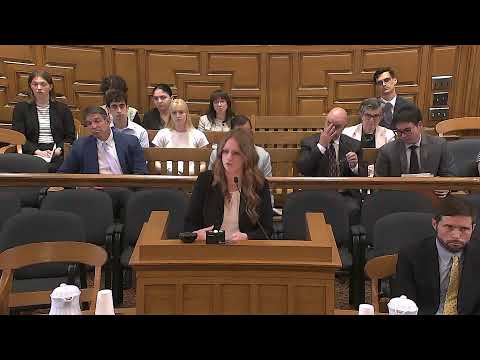
The Appeals Court heard oral argument July 14, 2026, in Commonwealth v. Alexander J. Cole, docket number 25P1326, a direct appeal of a resisting-arrest conviction. Thomas Miller, counsel for the appellant, told the expanded five-judge panel that the Commonwealth failed to prove that Cole knew he was under arrest at the time of the alleged resisting conduct and that trial-court evidentiary rulings admitting warrant-related testimony and closing argument were prejudicial.
"The evidence was insufficient that Mr. Cole knew he was under arrest," Thomas Miller told the court, emphasizing that his client had just been rescued from an elevator shaft and was being examined by EMTs when officers attempted to restrain him. Miller argued the testimony describing a warrant was highly prejudicial and that the defense should have been permitted to rebut that evidence with a CAD (computer-aided dispatch) sheet.
Panel members pressed Miller on when a reasonable person would have known an arrest was occurring — for example, whether the moment is when officers displayed or attempted to apply handcuffs or when an officer gave an oral statement. Miller stressed that much of the record showed Cole lying on the ground with his hands under him, without direct contact with officers, distinguishing the facts from precedents the panel cited in questioning.
Tracy Kelly, appearing for the Commonwealth, urged the court to affirm the conviction. Kelly said the trial evidence, viewed in the light most favorable to the Commonwealth under the Lattimore standard, supported a jury finding that Cole knew he was being arrested. Kelly pointed to testimony that officers told the defendant to place his hands behind his back, the presence of multiple officers and the defendant’s flailing and resistance while officers attempted to handcuff him.
Kelly also disputed the defense contention that production of the CAD sheet in discovery automatically authenticated it. She argued the CAD entry did not, on its face, establish when or whether the officer actually learned of the warrant and that the trial judge was within her discretion to require authentication before admitting it.
Justices questioned both sides about (1) whether a handcuffing attempt or the instruction to put hands behind the back can substitute for an explicit statement that the defendant is under arrest, (2) whether a five-year delay in prosecution that left an officer’s memory "exhausted" affects the sufficiency review, and (3) whether the Commonwealth proved force or the creation of a substantial risk of injury. Counsel agreed the case turned on factual inferences and the panel repeatedly cited prior authorities (discussed at argument as Lattimore, Commonwealth v. Soon, Grant and Dostoy) in framing the sufficiency standard.
After the oral argument, the presiding justice said the court would take the matter under advisement. No vote or decision was rendered from the bench during the sitting.