Get Full Government Meeting Transcripts, Videos, & Alerts Forever!
Get email alerts on the Whitewater Park topic
No spam. Unsubscribe anytime.
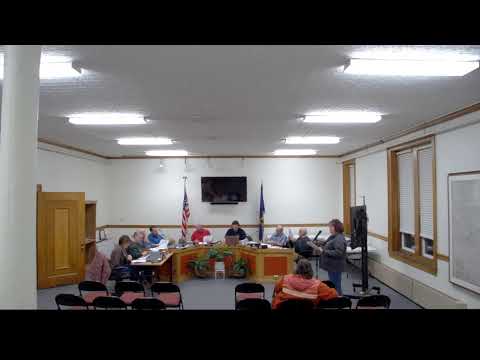
Skowhegan planning board unanimously approves Phase 1 of Main Street Skowhegan’s Whitewater Park
Summary
The Town of Skowhegan Planning Board unanimously approved the major site plan, shoreland and floodplain permits for Main Street Skowhegan’s Phase 1 Whitewater Park, with the first requested waiver contingent on Select Board approval; Main Street will operate and maintain the facility under a 10‑year lease.
The Town of Skowhegan Planning Board voted unanimously to approve Main Street Skowhegan’s Phase 1 site plan for the Skowhegan Whitewater Park, granting the shoreland and floodplain permits and the applicant’s requested waivers, the board announced at its meeting.
Main Street Skowhegan president and CEO Christina Cannon told the board that the nonprofit will carry responsibility for construction, fundraising, operations and maintenance under a lease with the town. “Main Street is taking full responsibility for construction and for all fundraising and project management and operations and maintenance of the park,” Cannon said. She added that the lease term will be 10 years.
The approved Phase 1 work includes a 12‑foot finished asphalt maintenance and access trail from Mount Pleasant Avenue, a concrete plaza and ADA access ramp to the water, excavation of multiple sculpted concrete pools and two engineered drop structures set into bedrock to form recreational hydraulics. The design includes a small (about 6 by 7 foot) wave‑shaper control shed above the 100‑year floodplain that will house hydraulic equipment and a reservoir that the engineering team estimated will hold roughly 10–20 gallons of food‑grade hydraulic fluid.
Dan Shea, product manager for Merrick Whitewater, described the wave shaper as a torque‑tube assembly actuated by hydraulic cylinders that can be adjusted to create surf waves, breaking waves for kayaking or other conditions. Shea said the design includes debris racks and vaults for sensitive hydraulic components to reduce maintenance and hazard risk, and that engineers will perform a start‑up and tuning process with experienced operators before the facility opens to the public.
Board members pressed for details on staffing, long‑term maintenance and environmental risks. Shea said routine operation will likely require two to three part‑time operators and occasional debris removal; Cannon said Main Street plans to absorb operations into its recreation budget, noting the organization’s recreational programs budget is roughly $500,000 and that the group expects to hire a wave technician and use AmeriCorps staff for seasonal programming.
Members asked about the effect of potential upstream dam removal and about a sanitary sewer outfall upstream of the site. Engineers said the project sits in a relatively stable downstream reach and that the wave‑shaper’s flexibility should allow continued operation under a range of hydraulic conditions, while acknowledging that large geomorphic changes from dam removal are difficult to predict. On sewage, the team described the outfall as part of a combined system and said sanitary discharge would occur only during overflow/storm events; members discussed signage and public notification for those rare occasions.
At the meeting the board reviewed four waiver requests (application fee, medium‑intensity soil survey, vehicle trip estimates and the performance guarantee). The board approved the waivers as part of the package; the first waiver (application fee) was recorded as contingent on Select Board approval. The motion to approve the site plan, shoreland permit and floodplain hazard permit was moved by a board member serving as speaker 8 and seconded by speaker 10; the board then voted "all in favor" and the Chair declared the vote unanimous.
Cannon said fundraising is ongoing and, if successful, the access road construction could begin in mid‑April with major in‑river work in mid‑July and tuning the following summer; she projected a possible public opening in 2028 and named Sargent Corporation as the construction manager at risk.
The planning board’s action grants Main Street the permits needed to proceed with Phase 1; the approval includes conditions and the noted contingency for the fee waiver. The board reminded the public that appeal information and permit documentation are available after the meeting.