Get Full Government Meeting Transcripts, Videos, & Alerts Forever!
Get email alerts on the Land Use Variance topic
No spam. Unsubscribe anytime.
Zoning board denies variance for 453 Elm Street, citing lack of statutory hardship
Summary
The Monroe Zoning Board of Appeals voted unanimously to deny a request that would have raised lot coverage to about 26.5% at 453 Elm Street; the applicant argued a post-2013 change in the town's coverage rule created a hardship, while commissioners said the application reflected a esire rather than a statutory hardship.
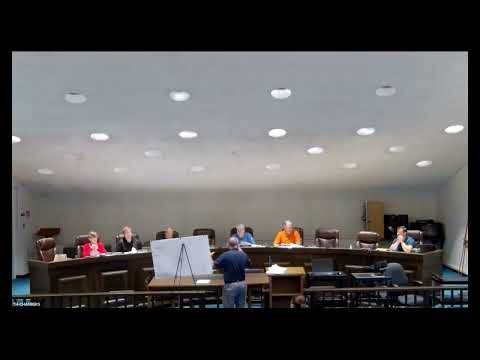
The Monroe Zoning Board of Appeals on July 7 denied a variance request for 453 Elm Street that would have allowed approximately 26.5% lot coverage instead of the 15% maximum now required by regulation. The motion to approve failed and the board voted to deny the application, 5-0.
Architect Jamie Milmore, representing homeowners Charlie and Jean Wade, told the board the house received a certificate of occupancy in 2008 and that the town's 2013 revision — which began counting driveways, walks and other impervious surfaces toward lot coverage — has effectively rendered the property nonconforming. Milmore described a proposed backyard package of a pool, cabana/pavilion and a detached two-bay garage totaling roughly 1,776 square feet and said immediate neighbors had submitted five letters of support.
"When this house was built in 2008, the building coverage was about 3,142 square feet, approximately 7.2%. The change in the regulations has adversely affected this land," Milmore said.
Several commissioners pressed the applicant on the legal standard for a variance. Commissioner Margaret Lee cited state standards and asked whether the homeowners were suffering the statutory "hardship" necessary to justify relief. "The people have to be suffering a hardship, not the land," Lee said, adding that the application sounded "more like a want." Commissioner Ron Selmyk reminded the board: "This board does not make the regulations. The Planning and Zoning Committee makes the regulations." Board members cited the existing coverage figure (about 17.3% including driveway and other impervious areas) and noted the proposed work would add a significant percentage of coverage.
After discussion, the board concluded the application did not meet the required hardship test under Connecticut statutes and voted to deny the variance, 5-0.
The town's wetlands office and staff noted that wetlands review would still be required at the building-permit stage if the applicant pursued construction, but the denial means the applicant must either redesign the project to comply or seek further action from the Planning & Zoning Commission or the town's regulatory process.
Authorities referenced in the hearing included the Connecticut statutes applicable to zoning variances and the town zoning regulation cited by the applicant, regulation 3.1.0.7.