Get Full Government Meeting Transcripts, Videos, & Alerts Forever!
Get email alerts on the Open Meetings Law topic
No spam. Unsubscribe anytime.
City attorney warns against 'walking quorums,' urges social media and email best practices
Summary
City attorney Anthony Steffek gave a primer on Wisconsin open meetings rules, warning that serial one-on-one communications can create illegal 'walking quorums,' advising one-way FYI emails, avoiding reply-all, treating council social-media pages as public records, and disabling comments when appropriate.
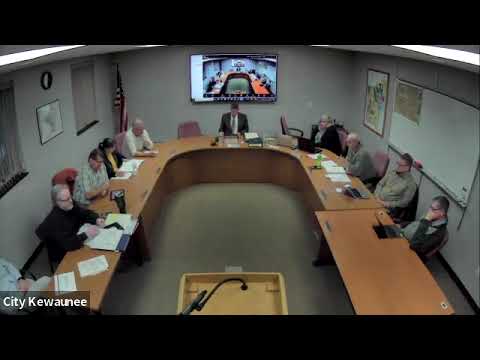
Anthony Steffek, the city attorney whose presentation the agenda listed for the item, told the council that the most frequent open-meetings risk in the electronic era is the so-called "walking quorum" — a series of one-on-one or small-group communications that aggregate to the size of a decision-making majority.
"It's a series of gatherings among groups of members, each smaller in size than a quorum. And out of that comes some sort of agreement to act uniformly," Steffek said, explaining that email chains, reply-all messages and text groups can inadvertently create a walking quorum and violate Wisconsin's open meetings law.
Steffek advised practical safeguards: use electronic communications for one-way FYI notices rather than debate; avoid hitting reply-all; do not create text-message groups for deliberation; and put issues that require discussion on a properly noticed agenda. He warned that plaintiffs’ lawyers will pursue technical violations even where no one was harmed, and that litigation can recover attorney fees.
On social media, Steffek told the council that pages or accounts portrayed as official create public-record obligations and limited-public-forum risks: "You can't block anybody because you've created the limited public forum, and you can't delete individual comments" unless they meet narrow exceptions. He recommended disabling public comments or clearly labeling personal accounts with disclaimers stating the speaker does not represent the city.
Steffek also reviewed best practices around retention of city emails and text messages, noting that auto-delete settings can jeopardize records preservation and that text messages about city business are subject to public-record rules.
The presentation concluded with an offer to circulate written guidance and provide follow-up with staff; council members raised a few clarifying questions but did not take action beyond asking staff to circulate the materials.