Get Full Government Meeting Transcripts, Videos, & Alerts Forever!
Get email alerts on the Historic Sites topic
No spam. Unsubscribe anytime.
Independence council hears competing public pleas as staff estimates $18 million for historic-sites bond
Summary
Speakers representing preservation groups urged the council to place a single-issue general obligation bond on the November ballot to address deferred maintenance across four city-owned historic properties; opponents urged exploring grants and private funding first. The council voted 5-0 to place a resolution on July 20 and an ordinance for first reading on Aug. 3.
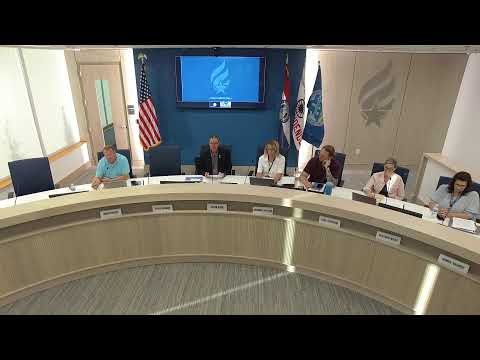
Councilmember Perkins opened a study-session discussion July 13 on a proposed single-issue general obligation bond to fund preservation of four city-owned historic properties, saying the question should appear on the Nov. 3 ballot and staff would return with a dollar amount for voters to consider.
The proposal centers on the Bingham Wagner Estate, the Vail Mansion, the Truman Memorial Building and the 1827 log courthouse. City Manager Anderson told the council that staff's preliminary, high-level estimate for capital outlay is "probably in about the $18,000,000 range," including a sizable contingency to reflect early-stage uncertainty.
Why it matters: public and private stakeholders described diverging views on how to pay for preservation. Some nonprofit boards and downtown advocates said deferred maintenance has grown and only a dedicated bond can provide the scale and accountability needed. Others told the council the city should exhaust grant, tax-credit and private-capital options before placing a taxing question before voters.
During the public-comment period, Robin Baker Bacari, speaking on behalf of local business owners and residents, urged caution: "Please, please slow down and explore all the options." She listed possible alternatives including state historic preservation funds, the National Trust, preservation tax incentives and community development block grants and argued a GO bond is "totally uncalled for at this time."
Pam Fulmer, representing the Vail Mansion board, said volunteers operate the mansion and tours and fundraising cannot cover large-scale exterior rehabilitation or long-term maintenance; "We do see the need for a GO bond," she said, adding that converting the house to commercial uses would jeopardize public access and could conflict with preservation covenants tied to the property.
Steve Uret of the Bingham Wagner board and Ethan Stark of Historic Kansas City framed the bond as a practical funding mechanism. Stark summarized condition assessments and said the next step is to identify a funding mechanism "capable of addressing more than $13,000,000 of deferred maintenance." Uret asked council members to "let the people decide" the question at the ballot box.
Council discussion focused on the contingency applied to early estimates, neighborhood benefits and the ballot schedule. Councilman Perkins moved to place a resolution on the July 20 council agenda and an ordinance for first reading on Aug. 3; the motion passed on a roll-call vote, 5-0. The resolution will be on the July 20 meeting agenda and staff will refine cost estimates and the ballot language before August's first reading.
What comes next: staff will refine the construction and contingency estimates and return with recommended bond amounts and draft ballot language. The council's July 20 agenda will include the resolution to begin that process.