Get Full Government Meeting Transcripts, Videos, & Alerts Forever!
Get email alerts on the School Transportation topic
No spam. Unsubscribe anytime.
Scobey board weighs buying 54‑passenger bus, balancing trades and depreciation funds
Summary
At an open fleet-planning meeting, board members discussed a quoted $190,000 price for a 54‑passenger yellow school bus, trading older vehicles for smaller activity buses, and using bus-depreciation funds or a local loan to finance purchases while guarding against audit risk.
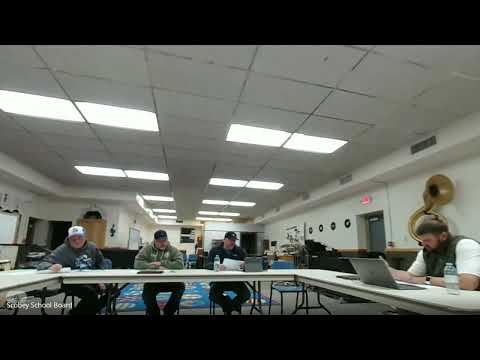
Chair (Speaker 1) opened an informal planning discussion on the district vehicle fleet and said the board must decide which vehicles to prioritize replacing and how to pay for them. The chair reported a vendor quote for a new 54‑passenger yellow school bus and asked the group to develop a practical, finance‑aware plan.
The meeting centered on three choices: buy a new 54‑passenger yellow bus, add a small activity bus (13–15 passenger) to ease event scheduling, or replace an aging 48‑passenger cruiser. Board members and staff discussed trading older vehicles (Suburban/Expedition or the district's older cruiser) to help finance purchases while respecting fund restrictions. "This is what we prioritize. This is what we're doing, and kinda stick with the game plan," the chair said when framing the decision.
Staff members noted constraints on the district's bus-depreciation (transportation) funds: depreciation funds are primarily eligible for yellow route buses, and auditors scrutinize nonstandard workarounds. One staff member recounted a prior solution the district used — a short-term local loan that allowed depreciation dollars to help cover payments — but cautioned auditors "didn't like" that approach. The staff guidance led the board to consider a mix of trading, depreciation and, if necessary, a local loan to spread costs.
Board members ran budget scenarios aloud. The transportation fund balance was cited at roughly $483,000; purchasing the quoted $190,000 yellow bus would leave an estimated ~$293,000 in the fund at year end assuming no other purchases. The chair and staff discussed hypothetical trade values (older cruisers estimated to bring only a few thousand dollars) and an example $120,000 price for a 15‑passenger replacement, highlighting how sequential purchases would reduce available depreciation for future cruiser replacement.
Beyond finances, members raised operational limits: drivers with proper endorsements are required to operate yellow route buses, and district staff asked who among current personnel could legally drive a 54‑passenger bus for long trips. They also discussed growing extracurricular demand — football, volleyball, FFA and cross country — and a schedule change in junior-high athletics that now holds boys' and girls' contests together, increasing simultaneous vehicle needs. One participant flagged Title IX timing concerns as part of the scheduling shift.
The board emphasized caution because bus funds are audit‑sensitive: staff said they document decisions and email approvals to create an audit trail. The meeting did not contain a formal vote or motion; instead members agreed to gather more information from vendors about availability and delivery timelines and to run refined budget scenarios before a formal procurement decision.
Next steps: staff will contact vendors to confirm stock and lead times for a 54‑passenger yellow bus, re-run the depreciation/trade math and report back to the board with updated cost, trade‑in estimates and a recommended sequencing strategy.