Get Full Government Meeting Transcripts, Videos, & Alerts Forever!
Get email alerts on the Udo Amendment topic
No spam. Unsubscribe anytime.
Commission declines to recommend UDO Amendment 80 on data centers and battery storage after tight debate over enforcement, notice and decommissioning
Summary
Planning staff proposed UDO Amendment 80 to regulate data centers (three tiers) and utility‑scale battery energy storage systems; commissioners adopted several staff changes but then failed to recommend approval of the amended ordinance. Public testimony urged more detailed categorization and stronger enforcement and financial assurance.
Independence planning staff presented UDO Amendment 80 on July 14 to add use‑specific standards for data processing/hosting facilities and utility‑scale battery energy storage systems. The amendment outlined a three‑tier approach (accessory, small/major), setbacks and buffers, noise and generator‑testing rules, closed‑loop cooling requirements, decommissioning plans and potential financial assurance.
Staff described accessory facilities as smaller, campus‑serving uses (up to about 2.5 megawatts, roughly a 20,000‑square‑foot building equivalent) and major facilities as those above 2.5 megawatts. For major centers the draft called for a 100‑foot equipment setback, a 100‑foot landscape buffer and a 500‑foot separation from residential uses and sensitive sites such as parks, schools, day cares and hospitals. The amendment also proposed mandatory decommissioning plans, annual compliance certifications and adherence to standards such as NFPA 855 and the International Fire Code for large energy storage systems.
Commissioners pressed staff on enforcement capacity, generator‑testing limits (hours per month), whether closed‑loop cooling will limit water use, how parking and reuse would work after decommissioning, and whether the city has staff to inspect and police ongoing maintenance. Staff said community development, fire and other city departments would be responsible for enforcement and noted that the UDO is a living document that can be revised.
Daniel Morehead of the Independence Guard Alliance urged more granular categorization (distinguishing hosting, AI training, hyperscalers), complained that previously permitted projects had escaped newer standards, urged that projects without final permits be captured by the new rules, and recommended using the moratorium period for more study. "You really need to actually say... if there's no permit, if they haven't produced a site plan... those folks should follow the exact same rules as anybody new coming in," he said.
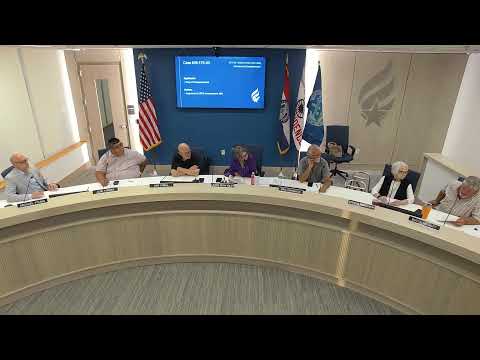
Commissioner Young proposed amendments requiring decommissioning financial assurance (bond or letter of credit) for all facility categories, a requirement that large and major facilities provide parking meeting city standards upon decommissioning, lengthening neighborhood meeting notice to 30 days with certified mail, and applying the rules to projects that have not yet received final permits. The commission voted unanimously (7–0) to add Young’s amendments to staff’s draft. Later, a motion to recommend approval of Amendment 80 as amended failed in the final vote, leaving the moratorium period in place and signaling that the commission wanted additional analysis and assurance prior to recommending the full package to city council.