Get Full Government Meeting Transcripts, Videos, & Alerts Forever!
Get email alerts on the Zoning topic
No spam. Unsubscribe anytime.
Town meeting reviews 2024 zoning ordinance edits, debates limits on cell towers and floodplain language
Summary
At a local meeting, participants reviewed proposed edits to the town's 2024 zoning ordinance, including removing language that would allow cell phone towers in commercial zones, clarifying floodplain boundaries and measurement, defining village-residential density, and aligning commercial-camping rules with state sanitary laws. Staff were directed to seek an engineering quote and issue an RFP ahead of the Oct. 15 meeting.
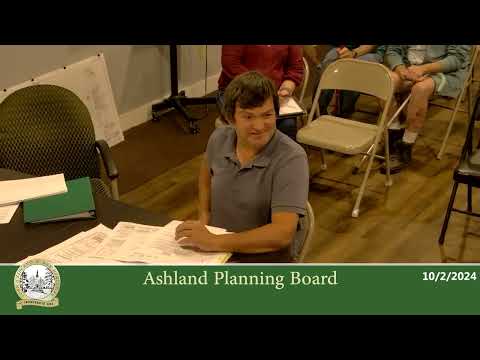
At a meeting to review proposed changes to the town's 2024 zoning ordinance, the Chair and committee members debated edits to several land-use sections, including language that would limit where cell phone towers are allowed and clarified floodplain boundaries and sanitary requirements for commercial camping.
The Chair said the application under review "is benefiting the town greatly," but warned the process "is going to be a long process" that will involve multiple meetings and public hearings. The committee agreed to seek additional technical work before making final recommendations: "Marissa will send out the request for a proposal," the Chair said, and staff were asked to obtain a second engineering quote in advance of the Oct. 15 meeting.
Why it matters: The ordinance edits under discussion affect where infrastructure and new development may be sited and how sensitive areas such as floodplains are defined. Changes to density definitions for "village residential" and sanitary requirements for commercial camping could change permitting outcomes for developers and property owners and trigger additional permitting steps.
Key proposals and debate A committee member proposed striking language that currently would allow cell phone towers in commercial zones and replacing it with more restrictive text to limit where such towers can be placed and to clarify which support structures and business types are permitted. The committee member said the change is intended to narrow the ordinance's permissions for towers. The Chair and the member exchanged wording suggestions about how the ordinance should insert or remove phrases to make the allowed locations explicit.
Members also discussed floodplain language in the update. The Chair said the ordinance should clearly prohibit activities that are not explicitly allowed in the flood zone and noted that the town needs consistent measuring language; he identified the current flood line as defined by the New Hampshire Water Resource Board gauge at the Route 3 bridge over the Strong River and urged that same measuring reference be used in the ordinance text.
On village-residential density, speakers said the terms "village residential" and the associated contact area need precise definitions so density limits are enforceable. A committee member raised a related point about an internal line referenced in the draft (transcript phrasing unclear) and asked that the drafting clarify how density is measured.
The committee also recommended aligning commercial-camping rules with state sanitary laws and regulations, and proposed removing a phrase that references a dam from a mapped boundary so the town's map and text match state definitions.
Other items Committee members asked whether large-scale solar ‘‘energy fields’’ beyond personal use would require review; they agreed such projects should come before the town for review. The Chair confirmed handouts from the municipal association listing dates for the zoning timeline were distributed.
Enforcement and public engagement The Chair described a property that may be operating as a home business and said staff had received traffic complaints; the committee asked that the owner be asked to appear so members can determine whether the activity meets the home-occupation standard. The Chair said the major development application will touch many departments and issues — roads, water, sewer, bridges and wetlands — and is likely to generate a series of public hearings.
Next steps The committee directed staff to issue an RFP and obtain a second engineering quote before the Oct. 15 meeting to inform ordinance drafting and project review. No formal vote on ordinance language was recorded at this meeting; the body will return to the item for further drafting and public hearings.