Get Full Government Meeting Transcripts, Videos, & Alerts Forever!
Get email alerts on the 266 Sherman Rehab topic
No spam. Unsubscribe anytime.
City staff report pervasive rot and asbestos at 266 Sherman Avenue; sale plans intact
Summary
Public works staff updated the council on extensive, previously undocumented structural damage at 266 Sherman Avenue (including rot and asbestos), said prevailing-wage thresholds were triggered, and noted the city intends to finish proper repairs before offering the two structures for separate sale.
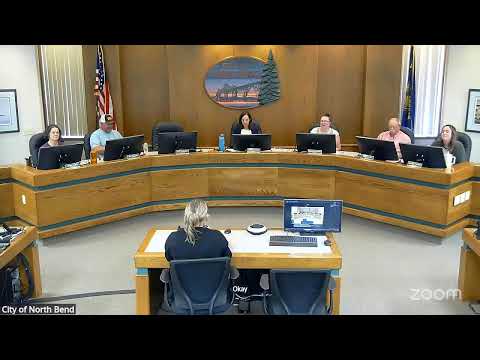
City staff told the North Bend City Council on July 13 that rehabilitation work at 266 Sherman Avenue uncovered far more structural damage than originally known, requiring expanded repairs and a return to council if costs exceed contract-authorized contingencies.
The public works director said the city had authorized Tom Gajewski Construction to replace a common wall but that, once work began, crews discovered rotting from ground level up, multiple unpermitted remodels and asbestos in flooring. "There was a lot more damage to that structure," the public works director said, summarizing what crews found as walls were opened.
Staff said the discovery pushed the project past the threshold that triggers prevailing-wage requirements, which increases labor costs compared with the original, smaller contract. The director explained that the city had poured a new foundation under the replaced wall where there had been no proper foundation previously and that the 2064 portion of the property is now essentially complete while the 2066 portion (the common wall) is where the additional work is concentrated.
City staff also described a future plan to sell the two properties separately; completing a 2-hour firewall between units is part of preparing the buildings for individual sale. The director said the city will return to council with a reconciled final price after completing the remaining work and assessments.
Councilors and staff agreed the property meets urban-renewal blight standards. Staff noted a secondary saving: tenants had voluntarily relocated, avoiding the statutory obligation under Oregon law to relocate and house tenants while the work occurs.
Staff said they coordinated with the adjoining tenant during construction (installing a temporary partition so the tenant could continue operations) and reported no complaints to date. Councilors asked about the building’s age and history; staff referenced the tax rolls showing a circa-1934 building with multiple past remodels.
No formal council action was taken at the July 13 work session; staff will return with a final reconciled price and any recommended contract changes.