Get Full Government Meeting Transcripts, Videos, & Alerts Forever!
Get email alerts on the Parking topic
No spam. Unsubscribe anytime.
Evanston staff say new credit‑card convenience fees are cost‑recovery; council seeks packet and public discussion
Summary
Deputy City Manager Karina Sanchez told council the city is rolling out processing fee pass‑throughs (parking fees began July 1; Collector's Office fees to start August 1) to recover roughly $1.3 million paid in card fees in 2025. Council asked staff for a formal discussion packet, vendor contract details and options including wallet fee structure and potential mitigations.
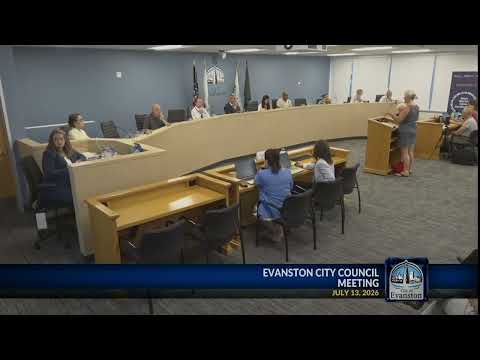
Deputy City Manager Karina Sanchez briefed the Evanston City Council on July 13 about a phased rollout of credit‑card convenience fees that staff say are intended to recover third‑party processing costs rather than generate revenue for the city.
"This is not a new tax, and it is also not a revenue‑generating measure for the city," Karina Sanchez said, explaining the policy is a cost‑offset to avoid further drawing on reserves. She told council that in 2025 the city paid about $1.3 million in credit‑card processing fees, with roughly $500,000 attributable to parking transactions.
Sanchez described the rollout schedule: a convenience fee was added to parking-meter transactions on July 1, wallet users will see a 30¢ processing fee per transaction (a one-time wallet-load fee is 47¢) and Collector's Office credit‑card payments will begin including fees on August 1 as the city works with vendors and reviews contracts. She estimated other fee rollouts will follow over the next 6–12 months.
Council members raised concerns about proportionality, impacts on downtown businesses and the wallet fee model. One member noted a 30¢ fee represents a flat surcharge that affects a 15‑minute parkers the same as an hour‑long parker. Staff said the city could negotiate with vendors when the contract is revisited (the current vendor contract runs through Dec. 31, 2027) and that staff will return with options and packet materials for a formal discussion.
Council did not adopt any ordinance or formal policy at the meeting; members moved to add a discussion item to a future agenda and asked staff to provide a briefing packet for public review.