Get Full Government Meeting Transcripts, Videos, & Alerts Forever!
Get email alerts on the Short Term Rentals topic
No spam. Unsubscribe anytime.
Keene planning board continues short‑term rental ordinance after wide-ranging public workshop
Summary
City planners proposed a short‑term rental definition and limited use standards to keep existing rentals operating; residents warned of neighborhood impacts and enforcement gaps. The board voted to continue the ordinance to Sept. 14 so staff can return with options on registries, taxation overlaps and enforcement.
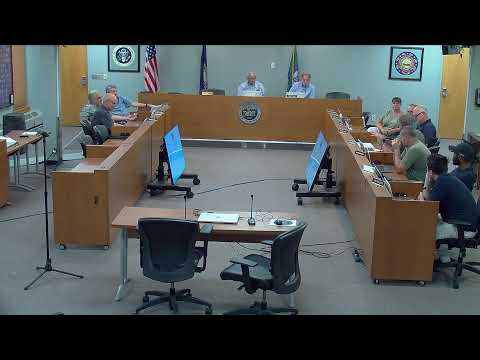
The Keene joint Planning Board and Planning, Licenses & Development (PLD) Committee on Tuesday heard more than an hour of questions and public comment before voting to continue Ordinance O‑2026‑09, a staff proposal to define and regulate short‑term rentals.
Mary Brenner, senior planner, told the committees the purpose of the ordinance is “to maintain the status quo.” Staff proposed defining a short‑term rental as a dwelling or portion of a dwelling offered for occupancy for a fee for fewer than 30 consecutive days, allowing hosted and non‑hosted varieties and permitting the use in the city’s residential districts with two main use standards: maintain a residential appearance and, for non‑hosted units, post contact information for an owner or a manager within an hour’s drive.
The presentation prompted sustained policy questions from board members about enforcement, taxation and long‑term housing impacts. Councilors asked whether short‑term rentals are paying the meals‑and‑rooms tax; Brenner said that collection is a state responsibility and that a local licensing or registry program could be used to improve oversight but would require additional staff resources. She also noted commercial data services exist to track listings (she estimated an example vendor at roughly $10,000 per year).
Public comment split along familiar lines. Pro‑host speakers said short‑term rentals bring visitors and taxes to Keene and that many hosts screen guests; Hannah Maynard, a local host, said, “we've had hundreds of people come to our Airbnb,” and argued the market self‑regulates because hosting requires significant upfront investment. Several neighbors from Bergeron Avenue and surrounding blocks described more troubled experiences: absentee owners, high tenant turnover, unkempt lawns, ad‑hoc parking and safety concerns. One resident, Jacqueline Stromburn, brought photos and said a nearby house had become “unsightly” and caused residents to consider moving.
Board members and staff separated enforcement problems (code, fire and property maintenance) from the ordinance’s zoning mechanics. Several members urged distinguishing hosted from non‑hosted rentals and discussed whether to make some short‑term rentals conditional uses requiring public hearings. Others worried that stringent regulation could later force existing operators into nonconforming status and preferred a complaint‑driven approach with an affidavit process similar to home occupations.
After the public workshop, Councilor Phil Jones moved to continue Ordinance O‑2026‑09 to the PLD meeting on Sept. 14 so staff could produce alternative approaches and additional enforcement information; Councilor Ed Haas seconded. A roll‑call vote recorded the following affirmative votes: Harold Farrington; Mayor Jay Khan; Councilor Molly Ellis; David Bergeron; Mike Hayford; Kenneth Kost; Andrew Madison; Stefan Mayhew; Randy Filho; Phil Jones; Bobby Williams; and Ed Haas. The motion to continue carried.
What’s next: staff indicated they will return with options that may include a registry, licensing, conditional‑use frameworks or targeted enforcement strategies; they also flagged that adopting a local registry or licensing program would entail ongoing staffing and enforcement costs. The committee will consider those options when the ordinance returns to committee on Sept. 14.