Get Full Government Meeting Transcripts, Videos, & Alerts Forever!
Get email alerts on the Women In Energy topic
No spam. Unsubscribe anytime.
Panel at U.N. headquarters urges early inclusion, patient finance and training to boost women’s role in energy transition
Summary
At the High-Level Political Forum in New York, three women leaders at a UN panel said achieving SDG 7 requires moving women from token representation to decision-making, scaling women-led solutions, improving gender-disaggregated data, and directing patient capital and technical training to last-mile communities.
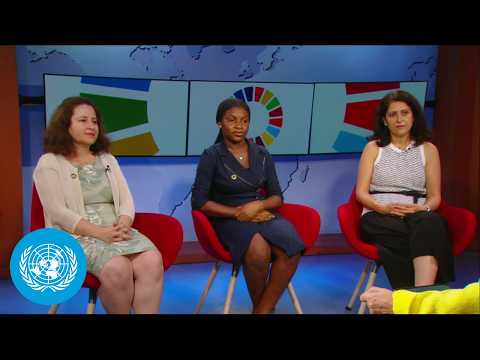
NEW YORK — Three women leaders at a High-Level Political Forum panel at United Nations headquarters on Tuesday urged early inclusion of women in energy decision-making, more patient finance for women-led enterprises, and expanded skills and mentorship programs to close gaps between policy goals and on-the-ground delivery.
Catherine Clay, lead energy analyst for The Washington Post, moderated the session during the official SDG 7 (affordable and clean energy) review and introduced the panelists: Celine Inal, founder of the Clean Energy and Green Transition Council at EcoMuse Consulting; Catherine Southa, founder of Africa Climate Futures and an MBA student at Duke University; and Rona Godim, director of the Division of Energy and Climate Action at UNIDO (United Nations Industrial Development Organization).
"We need to shift women from participation to decision making," said Celine Inal, who argued that having women merely present in meetings is not enough if they lack authority over investment and priority decisions. She urged scaling proven women-led projects beyond pilot stages and removing barriers to patient capital and market access so enterprises can grow.
Catherine Southa said the problem is often a gap between targets set in high-level rooms and what happens in communities. "If you close that gap and involve women from the beginning, the statements and policies are more authentic and implementable," she said, citing her experience coordinating youth climate consultations in Ghana.
Rona Godim emphasized reframing women as "change makers" rather than vulnerable beneficiaries, noting women entrepreneurs often develop practical solutions for clean cooking and local energy access that deserve support in both global discussions and local policy implementation.
Panelists listed three recurring implementation gaps: insufficient gender-disaggregated data, a skills gap for technical and maintenance roles, and a financing gap for women-led community energy efforts. "We don't have the data to inform better decision-making," Godim said, adding that credit guarantees and concessional finance can help overcome higher effective costs faced by community groups. She reported that those costs can make lending roughly 20% more expensive for some women-led groups.
Southa framed the financing problem as structural. She said roughly 24% of women in Africa are entrepreneurs but face an estimated financing shortfall she put at about $42,000,000,000. She also noted that Ghana's electrification rate looks high on paper—about 89%—yet households still struggle with affordability, underscoring the difference between access and usable, affordable service.
On practical remedies, the panel recommended expanding mentorship and one-to-one programs to accelerate women’s careers, changing how gender-lens capital is structured so it requires less onerous collateral and pairs finance with technical assistance, and aligning private-sector incentives with public policy to reach last-mile markets.
When asked where they would put a hypothetical $1 billion to improve outcomes by the next SDG review, Inal said priority one is measuring improvement with gender-disaggregated data; Southa said she would direct funds to leverage private-sector investment aligned with public goals; and Godim recommended investing in regional academies and in making national policies more gender-responsive in the Global South.
The panel did not issue formal recommendations or votes. The discussion fed into broader HLPF conversations about accelerating equitable, coordinated action on SDG 7.