Get Full Government Meeting Transcripts, Videos, & Alerts Forever!
Get email alerts on the Finance topic
No spam. Unsubscribe anytime.
Blanco County auditor presents clean opinion, highlights positive operating year and internal-control items
Summary
An auditor told the Blanco County Commissioners the county's financial statements for the year ending Sept. 30, 2025, received an unqualified (clean) opinion. The presentation showed revenues exceeded expenses and recommended procedural improvements such as bank-reconciliation and payroll controls.
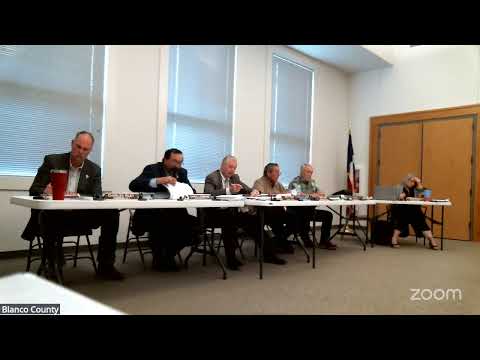
The county's most recent annual financial statements earned an unqualified ("clean") opinion from the auditor, who told the court the report shows a positive operating result for the fiscal year ending Sept. 30, 2025.
The auditor (Speaker 5) summarized the presentation to commissioners, saying the audit's condensed highlights included total reported revenue of about $17,000,005.46 and total expenses, including depreciation, of roughly $14,039,000, producing a reported net change of $2,707,396 for the year. He told the court that the county's fund balances increased over the prior year and described the county's net position as healthy.
"This is a unqualified opinion," the auditor said, adding that a clean opinion means "everything is okay" in his assessment of the county's financial statements. He pointed to strong pension funding ratios and noted the reported net pension liability had declined compared with the prior year.
The presentation also described the composition of county revenues and liabilities. The auditor noted property taxes accounted for a large share of the county's budget (he cited roughly 72.4% in his remarks) and that state and federal funding represented a much smaller percentage. He also reviewed capital-asset accounting, debt and notes payable, and highlighted the reconciliation steps between fund and government-wide statements.
Although the opinion was unqualified, the auditor identified several internal-control and reporting items for the commissioners to address. He recommended improved payroll clearing and multi-fund bank reconciliation procedures, and he flagged certain schedule and disclosure enhancements (for example, documentation around deposits and collateral for public funds and GASB 87 lease accounting) to maintain compliance with government-accounting standards.
Speaker 3 and other commissioners asked follow-up questions about specific balances and funding assumptions, and the court proceeded later in the meeting to ratify outstanding bills and continue budget-line reviews.
What happens next: commissioners received the audit presentation for the record and discussed next steps in budgeting and capital planning. The court did not adopt additional audit-driven policy changes during the meeting; staff and the auditor identified a small number of technical recommendations for follow-up outside the meeting.