Get Full Government Meeting Transcripts, Videos, & Alerts Forever!
Get email alerts on the Student Outcomes topic
No spam. Unsubscribe anytime.
Kent County highlights strong early‑childhood results and 93% graduation rate as it readies data platforms
Summary
Officials told the board Feb. 9 that early‑childhood assessment results and kindergarten readiness are strong, that Kent County Public Schools’ 4‑year graduation rate is 93.1% (above the Maryland average), and that the district is rolling out new PowerSchool‑based platforms for HR, SIS, analytics and assessments ahead of next school year.
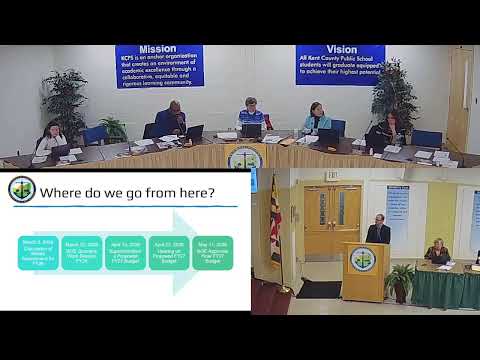
Kent County Public Schools presented a suite of instructional and operational updates to the Board of Education Feb. 9, spotlighting early‑childhood gains, graduation outcomes, and the district’s technology upgrades to support data‑driven instruction.
Early‑childhood outcomes: Miss Jakimowitz and early‑learning staff described the first round of the state‑approved Renaissance kindergarten readiness assessment, noting that the district ranked above the state average on early literacy and mathematics measures for the cohort assessed this fall. Staff credited long‑standing investments — universal pre‑K, early intervention (IFSP/IFSP services), Judy Center partnerships and teacher training in the science of reading (LETRS/Orton‑Gillingham) — for sustained gains.
"In Kent County, we have a strong history of investing early," staff told the board, adding that the district is piloting expansions for 3‑year‑old programming and plans to seek pre‑K expansion grants where appropriate. The early‑learning team also described a social‑emotional screener (SABER/SAVERS) that helps schools identify students needing individualized or small‑group supports.
Graduation and college/career readiness: Kent County High School Principal Chris Hemsetter said KCPS achieved a 4‑year graduation rate of 93.1% for the most recent reporting period, above the Maryland statewide average of 86.4%, which places KCPS among the top districts in the state. The Class of 2025 collectively earned more than $3.26 million in scholarships, completed substantial dual‑enrollment coursework (321 college credits), and had a high share of students earning industry‑recognized credentials.
Board members asked for further disaggregated data to verify that access and outcomes are improving across student subgroups (multilingual learners, students with disabilities, economically disadvantaged students). Hemsetter and staff said subgroup reporting is available and that the district will supply disaggregated CCR (college & career readiness) measures and other subgroup trend data in forthcoming reports.
Data platforms and analytics: Dr. McComas described an expanded set of PowerSchool tools now being implemented: eFinance (state finance tool), applicant tracking and records digitization, evaluation platforms (Perform), time‑clock systems, eCollect for forms, the PowerSchool SIS, Schoology (learning management), insights & analytics (the largest implementation lift), and Performance Matters for standards‑aligned unit assessments. IT lead Tom Porter explained that analytics and custom dashboards are the heaviest lifts (13–14 months), but most listed platforms are planned to be operational by the start of next school year with training following.
Finance and grants context: Finance director Mr. Kirby provided the Jan. 31 expenditure snapshot (Fund 1 revenue ~$24.5M; expenditures encumbered ~$26.8M of $35M budget). Administrators also flagged two multi‑year grants that will sunset and fund lead teachers and social workers; the board discussed strategies to sustain priority positions once grant funding ends.
Next steps: Administration will provide subgroup CCR and dual enrollment participation data on request, continue rollout and training for the new platforms, and pursue grant opportunities for early‑childhood expansions.