Get Full Government Meeting Transcripts, Videos, & Alerts Forever!
Get email alerts on the Rezoning 120 Baseline topic
No spam. Unsubscribe anytime.
Residents urge council to reject rezoning of 120 Baseline Road to manufactured‑housing district
Summary
Dozens of residents urged the South Haven City Council to reject a developer's request to rezone 120 Baseline Road to a manufactured housing community (MHC), saying the change would harm neighborhood character, reduce tax revenue and remove local oversight. Developer representatives contested those claims.
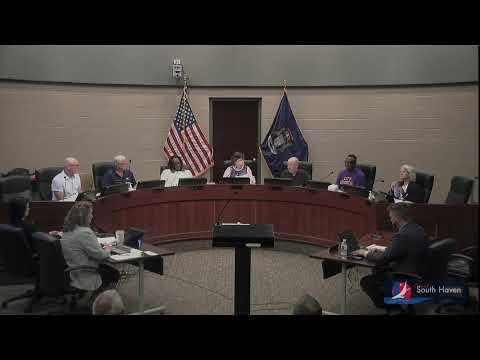
Dozens of South Haven residents told the City Council on July 6 they oppose a proposal to rezone 120 Baseline Road to a manufactured housing community, arguing the change would lower tax revenue, conflict with the master plan and strip the city of regulatory oversight.
“Those are empty window dressing,” resident Susan Shields said of eight proposed voluntary conditions, arguing they do not address the rezoning’s substantive harms. Mary Ellen Keith told council members the planning commission had recommended denial and urged them to follow that recommendation, noting “most neighboring residents voiced strong opposition” to the change.
Several neighbors described the property’s recent history and condition. Anne Panalone said the owner purchased a vacated nursing home and left the property unsecured and in disrepair, and cited permit violations. John Albury and Carlos Sivers said the master plan favors single‑family use and warned a manufactured housing district would undermine the city’s tax base and neighborhood character.
Proponents and the developer’s representatives disputed some procedural claims. David Wiatrowski, engaged by the property owner, said the project began under an allowed special use and that the team had worked with city staff on design and permitting; he said the owner removed the old building and pursued the permits in good faith. Eric Rosner, a summer resident and property owner, said he and his consultants planned a 24‑home community and that “we came to the city … and then, unbeknownst to us, they changed the zoning.”
Several speakers warned of legal and planning risks if the city relinquishes oversight. Jennifer Durkee said conditional rezoning could be enforced by the city but warned that sending authority to the Manufactured Housing Commission (MHC) would make that control difficult to recover and could reduce property tax revenue.
The public comment period on the item ran more than an hour and included arguments over technical distinctions between modular and manufactured homes, references to past planning commission hearings, requests for an internal investigation into alleged off‑the‑record assurances, and concerns about Fair Housing Act compliance.
The council did not take final action on the rezoning request at the July 6 meeting; the item remained under consideration and residents asked the council to deny the change and adhere to the planning commission’s recommendation. The planning commission’s denial, the developer’s stated timeline and the council’s next steps were the most recent procedural developments.