Get Full Government Meeting Transcripts, Videos, & Alerts Forever!
Get email alerts on the Chapter 5 Business Licensing topic
No spam. Unsubscribe anytime.
City attorney proposes broad Chapter 5 license rewrites, tighter rules for unlicensed 'bodywork' services
Summary
City Attorney Bradley Jepsen told the Bountiful City Council he will propose repealing several outmoded special‑business rules and amending Title 5 to allow license revocation for Class B misdemeanors or felonies, align alcohol‑license local consent with a recent state omnibus bill, and add local oversight for 'bodywork' services such as reiki or chair massage.
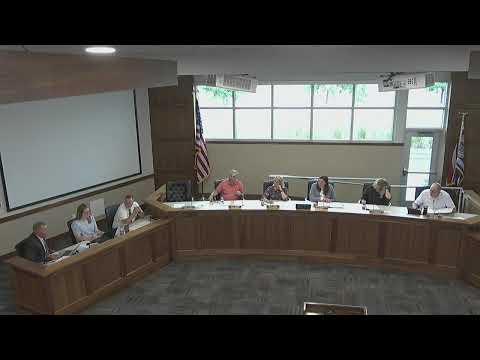
City Attorney Bradley Jepsen briefed the Bountiful City Council at a work session on proposed cleanups and policy changes to Chapter 5 of the city code governing business licenses.
Jepsen said staff will recommend repealing several narrow, dated special‑business sections—examples he flagged included pawnbrokers, public‑dance halls, amusement devices and a standalone professional‑dancer prohibition—and instead rely on updated event, land‑use or the city’s consolidated business‑license provisions where appropriate. “We’re going to take a bunch of businesses that we think have a higher level for criminal activity, deception, obstruction, or … a negative impact on the morals of the city, and we’re going to have their own special regulations,” Jepsen said.
Why it matters: Jepsen argued the local pawnshop rules largely duplicate state law (a state pawn/secondhand statute), making local provisions unnecessary and potentially preempted. On public dances and amusement devices he called the provisions outdated and said the city’s event and planning ordinances already provide appropriate tools. He recommended repeal of a standalone professional‑dancer ordinance because courts treat expressive dancing as protected speech; he said the comprehensive business‑license chapter already covers the city’s regulatory objectives.
Key proposed changes
• License‑denial standard: Jepsen proposed replacing the existing reference to crimes of “moral turpitude” with authority to deny, suspend or revoke a business license for the commission of any Class B misdemeanor or felony by the licensee or someone acting in the scope of the business. As an example he described a convenience‑store employee repeatedly selling alcohol to minors and the difficulty of holding the business accountable without this authority.
• Records and fees: Jepsen recommended removing an obsolete provision that required businesses to maintain four years of gross‑revenue records for license‑fee calculations, saying the city now uses headcount and the bookkeeping requirement is an undue burden.
• Alcohol licenses and state changes: Jepsen outlined administrative updates to align local practice with state licensing and noted a recent omnibus alcohol bill that restores limited local discretion for restaurants near parks and libraries. “This provision … is particular to restaurants, not bars,” Jepsen said, describing how the change lets councils engage in a local consent discussion in some proximity cases while schools and churches remain protected under state law.
• Massage and 'bodywork' services: To close gaps where state licensure does not apply, Jepsen proposed adding a local definition of “bodywork services” (examples he cited include reiki, reflexology, chair massage and similar offerings) and requiring either state licensure or a local verification process. The draft would create a mechanism for background checks and supervisory review for unlicensed providers and allow revocation when later evidence (for example police reports) shows misleading applications or illegal conduct.
Councilors asked several clarifying questions, including how the city would determine whether an application contained “materially false or misleading information,” and whether robotic massage devices or gyms offering robotic services should be covered. Jepsen said his intent for the misleading‑information language was to provide grounds to revoke or not reissue a license when investigation or police reports later show the business misrepresented services, rather than to deny every first‑time application without evidence. He said he would research other cities’ treatment of robotic‑massage devices and may propose language to capture devices used as fronts for unregulated services.
Enforcement and next steps
Jepsen told the council he will return with ordinance language and that staff expect to remove several chapters and reduce the number of special‑business chapters. He also said he would delay substantive fireworks code changes until any forthcoming state action is clear. The city planner and council members volunteered to provide feedback and staff will draft amendments for a future study session.
The council recessed for a short break and planned to reconvene for the regular meeting at 7 p.m.