Get Full Government Meeting Transcripts, Videos, & Alerts Forever!
Get email alerts on the Land Use Containers topic
No spam. Unsubscribe anytime.
Planning Commission reviews stricter rules for shipping and storage containers
Summary
Odessa staff presented a revised draft ordinance that would prohibit shipping containers as accessory structures in residential zones, permit limited containers in commercial areas with screening and caps, allow limited stacking in industrial zones, and establish 45-day temporary-use rules plus a 180-day compliance window for existing containers.
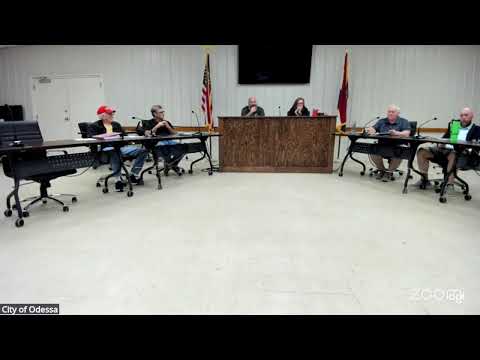
The Odessa Planning Commission spent much of its March 19 meeting reviewing a draft ordinance that tightens rules on shipping and storage containers across residential, commercial and industrial zones.
Staff told the commission the draft now distinguishes “shipping containers” — standard intermodal freight containers — from “storage containers” such as moving pods. The staff member said the draft would "prohibit shipping containers as accessory structures in residential zoning districts," and clarified that containers placed on vacant lots would be prohibited unless associated with an active permitted construction project and removed upon completion.
The draft would allow containers as accessory uses in commercial districts with conditions: a default cap of two containers per lot unless increased through an administrative site-plan review; placement behind the principal structure where feasible; a minimum 10-foot setback from any residential zoning boundary; and screening (for example, a solid fence at least 6 feet tall or evergreen landscaping). Staff also proposed that containers used for seasonal or overflow storage that exceed 90 consecutive days would require administrative approval.
Commissioners debated stacking limits and where they should apply. Several members said no stacking should be allowed in residential or most commercial settings, but conceded that industrial locations need flexibility for operations. A staff proposal to allow stacking in industrial zones generated discussion about limiting the height — "no more than two high in industrial" was suggested as a compromise in the draft — and whether different industrial subzones (I-1 versus I-2) should have distinct rules and setbacks.
On enforcement and temporary use, staff described a two-track approach: a temporary-use notification for short-term needs such as moves (45 days maximum, with possible 90-day extensions in the draft) and a 180-day compliance window for existing containers to come into conformance. Commissioners raised practical concerns about how officials would begin the 45-day clock and enforce removals; staff said they plan to work with code enforcement and police to draft enforcement language and fines and to emphasize education early in implementation.
Members pressed staff to tighten terms such as "solid fencing" (discussion focused on whether a chain-link fence with screening should qualify) and to provide clearer language about when a container becomes a structure subject to building codes (for example, when utilities are installed or it is permanently affixed). Staff agreed to return with revised wording, including specific language for semi-tractor trailers used as storage and for containers converted into building materials.
The commission did not take final action on the ordinance. Staff said they will revise the draft to incorporate the commission’s direction and bring a new version back for further review and the public hearing process.
The meeting record shows the discussion began with the agenda item introduced by the chair and staff and continued through detailed line-by-line review; no final vote on the ordinance occurred.