Get Full Government Meeting Transcripts, Videos, & Alerts Forever!
Get email alerts on the Meeting Location topic
No spam. Unsubscribe anytime.
Harbor District to hold two regular meetings in South San Francisco, board says
Summary
The San Mateo County Harbor District approved Resolution 2609 to hold two regular board meetings each year at South San Francisco's new council chambers to broaden public access; the motion passed after commissioners discussed outreach options and alternatives including keeping meetings at the district office or referring the matter to a subcommittee.
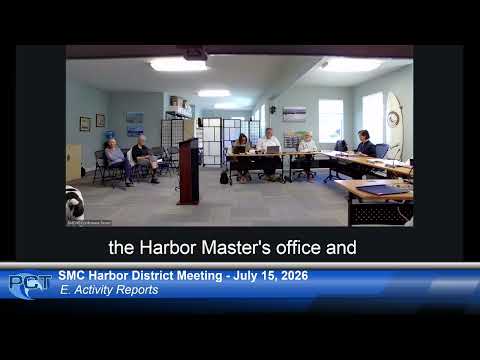
The San Mateo County Harbor District Board on July 15 voted to adopt Resolution 2609, authorizing two regular board meetings each year to be held at the City Council Chambers at the South San Francisco Civic Campus to expand public outreach and accessibility.
Staff presented the proposal and said the city offered use of its new council chambers free of charge. General Manager Jim said the move is intended "to reach out to more of the public" across the district and to make meetings more accessible to residents who live on the other side of the hill.
Board members discussed options including taking no action, keeping all meetings at the district office, referring the item to a subcommittee for further evaluation, or approving an amended resolution. One commissioner said that holding meetings in South City provides an opportunity "to get more exposure because most of the people in South San Francisco who live on the other side of the freeway don't know what's happening out on the bay." Another commissioner noted this practice was done before the COVID-19 pandemic and welcomed restoring it.
A motion to approve the resolution was moved and seconded and passed on a roll-call vote.
The decision directs staff to coordinate logistics and publicize the offsite meetings in accordance with the harbor navigation code. The board did not set a long-term schedule beyond approving two meetings annually; staff indicated other options remain available to the board, including disapproval or referral for further study.
The board moved on to other agenda items once public-notice and coordination tasks were assigned to staff.