Get Full Government Meeting Transcripts, Videos, & Alerts Forever!
Get email alerts on the Municipal Finance topic
No spam. Unsubscribe anytime.
Wausau committee grills chiefs on overtime as staff point to system and reporting gaps
Summary
Police and fire chiefs told the HR committee much overtime is driven by unavoidable late calls, staffing gaps and special events; HR and finance officials flagged a $70,000 reporting discrepancy tied to pay‑code mapping between time‑tracking systems and said Workday/IntelliTime integration and dashboarding efforts are underway.
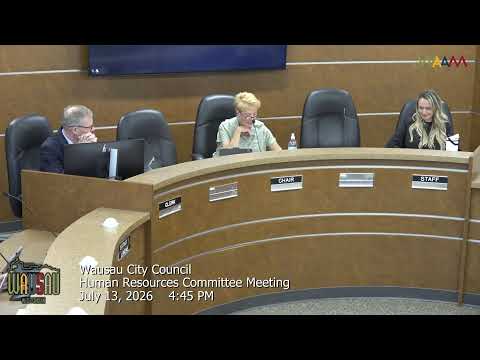
City department leaders told the Wausau Human Resources & Public Safety Committee on July 7 that much of the city’s overtime is driven by operational necessity, but committee members pressed for better data and clearer cost allocation for special events.
Police Chief Matt Barnes explained that two of the largest overtime drivers are late calls and special events — examples include investigations that extend past the end of a shift and staffing approved events where an officer’s presence is required. He provided category totals from 2024 (late calls: 1,132 hours; special events: 1,039 hours) and noted some overtime is fully reimbursed by grants or event organizers. Chief Barnes said the department budgets for overtime and that hiring additional officers would not eliminate overtime and is more costly in the near term because of recruitment, training and benefit costs.
HR Director Lisa Nowak added that for police and fire the rolling‑year FMLA utilization was 10,289 hours as of July 3, 2026, creating vacancies that must be filled and contributing to overtime. Director Mary Anne Sree (finance) and Nowak described discrepancies in historical overtime reporting: an open‑records request revealed a roughly $70,000 variance tied to a missing pay code in the data roll‑up. They said time‑tracking (IntelliTime) and payroll (Workday) systems use different codes and that the city is migrating police time data into Workday and building dashboards to improve reconciled reporting.
Committee members recommended more granular reporting showing how much overtime is reimbursed versus paid from city general funds and asked staff to explore cost‑sharing options for special events with the county when appropriate. DPW Director Lindman said overtime for street and winter maintenance is a planned, budgeted expense and that contracting out some inspection work would be more expensive than using overtime for in‑house staff.
Officials said system and process improvements (standard reports, code mapping and Workday/IntelliTime migration) could reduce discrepancies and help the committee and public understand how much of overtime is funded by external reimbursements. The committee asked staff to return with clearer dashboards and reconciled figures.