Get Full Government Meeting Transcripts, Videos, & Alerts Forever!
Get email alerts on the Police Sabbatical topic
No spam. Unsubscribe anytime.
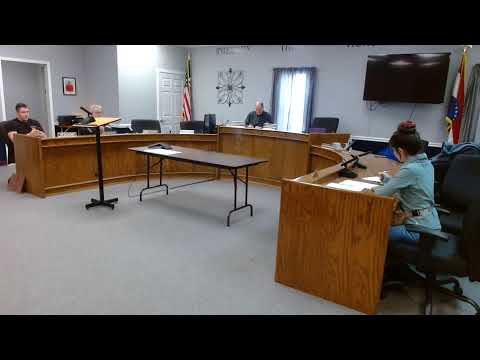
Personnel committee forwards 21‑day paid sabbatical proposal for Pleasant Valley police
Summary
The Pleasant Valley Personnel Committee voted unanimously to recommend a 21-calendar-day paid sabbatical for police officers and dispatchers, citing officer mental-health, retention and recruitment benefits; the recommendation will be included in the board packet for full board consideration.
The Pleasant Valley Personnel Committee voted to recommend that the full board consider a 21-calendar-day paid sabbatical policy for police officers and dispatchers, the committee chair said during the meeting.
The policy, presented by a police officer who identified himself as the department's CIT (crisis intervention team) coordinator, would allow full-time sworn officers and dispatchers who have completed four years of service to take a 21-day paid sabbatical (described by the presenter as 120 hours). The presenter said employees would have a two-year window in which to schedule the leave after becoming eligible and that employees on disciplinary probation or under active investigations would not be eligible.
The committee was told the measure was motivated by concerns about cumulative trauma and first-responders' mental-health. The presenter cited national figures, saying, "From 2018 to '25, 1,405 first responders have died by suicide," and described higher rates of depression, sleep disorders and PTSD among first responders compared with the general public; those statistics were presented as background by the officer and were not independently verified during the meeting.
Under the proposed rules explained to the committee, officers would turn in department phones, radios and other equipment before the leave, would not be assigned court or allowed to do off‑duty work while on sabbatical, and would complete a post‑sabbatical session with a licensed physician. The presenter said the department had arranged to use Beacon Hill Health for the post‑sabbatical session and that the expense had been included in this year’s budget.
Committee members asked about staffing and feasibility. The presenter said the department had seven officers on staff versus an authorized 10 — "we're down three" — and said requests would be denied if the department could not safely cover shifts. He described the policy as first‑come, first‑served when competing requests occur and recommended measuring sabbatical time in calendar days rather than business days to account for shift schedules: "It's calendar days, not work days," he said.
Several committee members expressed support for prioritizing first responders while noting the potential to study a broader leave policy for other full‑time city employees later. One committee member suggested the personnel handbook should be updated to add a high‑level reference to the policy and that the committee should form a recommendation to forward to the board; the chair moved that recommendation and it was seconded. A roll-call vote recorded three "yes" votes and the committee agreed to include a written report and the policy in the board packet for consideration by the full board.
Votes at a glance: The committee approved the January 15 minutes; it voted 3‑0 to recommend the police sabbatical policy to the full board; the committee subsequently adjourned.
The committee chair said she would prepare a personnel committee report to accompany the policy in the board packet; the full board will decide whether to adopt the policy at a later meeting.