Get Full Government Meeting Transcripts, Videos, & Alerts Forever!
Get email alerts on the PFAS Irrigation topic
No spam. Unsubscribe anytime.
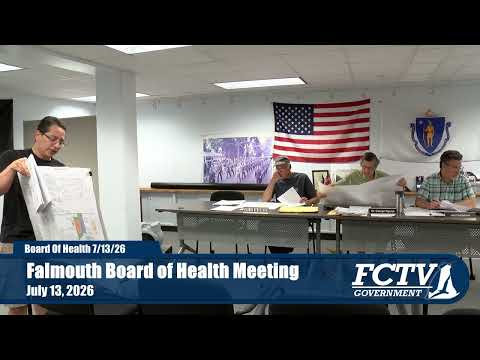
Falmouth Board weighs requiring PFAS testing for irrigation wells in newly identified plumes
Summary
Board members discussed whether to expand irrigation-well testing for PFAS in areas where recent mapping shows concentrations above the MCL; they asked for technical input from the base cleanup lead and discussed potential economic impacts on businesses reliant on irrigation.
Board members discussed recent PFAS mapping and whether the Board of Health should require additional testing of irrigation wells in newly identified contaminated areas. The board noted an existing regulation requiring initial testing of irrigation wells in areas of suspected contamination but observed the regulation does not currently require ongoing periodic testing.
Members raised these points:
- Technical scope: staff and members asked whether 310 CMR (state drinking-water regulations) now includes PFAS and whether new mapping showing MCL exceedances should trigger broader mandatory testing for irrigation wells.
- Economic and practical tradeoffs: board members noted that some businesses—garden centers, golf courses and commercial operations—may rely on irrigation wells for economic survival and that a blanket prohibition could create hardship. Members suggested tailoring any requirement and providing testing access (for example, pointing residents to county testing programs).
- Next steps: board members recommended asking Doug Carson (the joint-base cleanup engineer cited in the transcript) and other technical staff to present data and guidance; they discussed options for adding a section to the regulation requiring testing of existing irrigation wells in newly identified contaminated areas and for notifying affected well owners.
What happens next: the board asked staff to invite technical experts for the next meeting and to prepare options for a regulatory amendment or guidance to require testing upon discovery of new contaminated areas.