Get Full Government Meeting Transcripts, Videos, & Alerts Forever!
Get email alerts on the Education topic
No spam. Unsubscribe anytime.
Harrisburg superintendent points to steady gains as district rolls out new interventions; city intern presents food-access study
Summary
Superintendent Benjamin Henry described modest improvements — graduation rates rising from 67% to 69% and expanded reading, attendance and mental-health initiatives — and an intern, Sekou Bridal, presented a summer research project documenting concentrated food-insecurity in South Harrisburg and proposing further engagement and policy recommendations.
Superintendent Benjamin Henry told Harrisburg City Council the district has seen measurable but incremental improvements and outlined several initiatives planned for the coming school year.
Henry reported the district had 335 graduates this year, up from 302, and said the graduation rate increased from 67% to 69%. He described district-wide implementation of Corrective Reading in elementary and middle schools, a master-schedule audit to protect instructional time and added intervention minutes, expansion of math intervention pilots (Respond to Data) and the launch of a 9th-grade academy at John Harris campus. "We're working hard to answer the need of our students in our community," Henry said, emphasizing attendance and targeted interventions.
Henry also described mental-health partnerships with ESS (Effect the School Solution), reporting over 7,000 service hours provided to students, and said the district is moving to a phone-free policy in middle and high schools next year, while expanding clubs and tutoring to support retention and attendance.
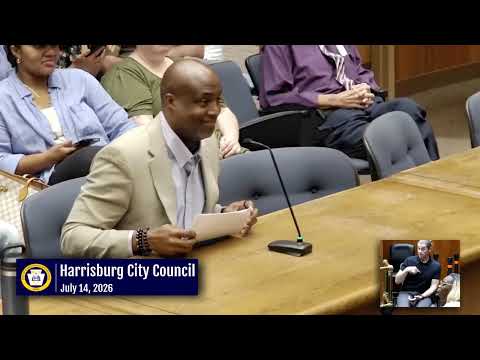
Separately, legislative research assistant Sekou Bridal presented a summer research and survey project on food access. Bridal told council that USDA-based definitions and Central PA Food Bank data point to concentrated food deserts in South Harrisburg and that his local surveying found many residents treat food as "flexible" relative to nonnegotiable costs like rent and utilities. He provided preliminary percentages from county-level data and described outreach plans, multilingual surveys and an intention to submit policy recommendations after further analysis.
What’s next: Henry said the district's comprehensive plan runs through 2029 and will guide implementation; Bridal said he will return with a final presentation and policy recommendations. Council members thanked both presenters and asked follow-up questions about program details and emergency-use options for federal funds (staff told council ESG cannot be repurposed for general emergency use).