Get Full Government Meeting Transcripts, Videos, & Alerts Forever!
Get email alerts on the Securitization Eversource Storm Costs topic
No spam. Unsubscribe anytime.
Eversource, Treasurer’s Office outline plan to securitize storm costs; Treasurer backs utility‑led issuing structure
Summary
Eversource and Connecticut’s Treasurer’s Office presented a plan to issue rate reduction bonds (RRBs) to recover 2018–23 storm costs, recommending a utility‑led special purpose entity with state oversight to preserve IRS tax treatment, achieve AAA ratings and deliver estimated near‑term bill savings for residential customers.
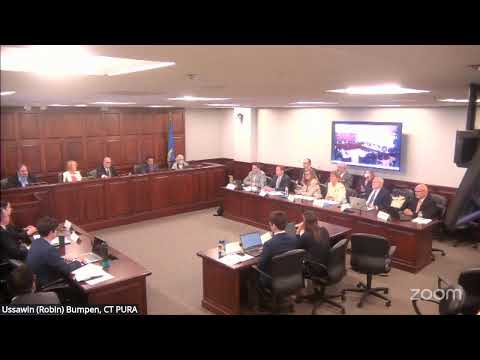
Everett Smith, presiding officer for Docket 260404, opened a technical session where Eversource and the Connecticut Office of the Treasurer described a plan to securitize the utility’s 2018–23 storm costs via rate reduction bonds.
Sarah Sanders, deputy treasurer, said the Treasurer’s Office has been meeting weekly with Eversource and advisers and will act as the financing authority with oversight through the financing order. Sanders said the working group has met “10 times” and will coordinate with structuring, rating‑agency and legal advisers to pursue an irrevocable financing order that preserves investor confidence and customer savings.
John Murphy of Public Financial Management (PFM), the treasurer’s adviser, said securitizations have been used widely for storm and other utility costs and explained why the structure can lower the cost of recovery for customers. “Connecticut is no stranger to this,” Murphy said, noting past transactions in the state and similar financings in other jurisdictions.
Presenters described the mechanics: bonds issued by a bankrupt‑remote special purpose entity (SPE) are repaid from a non‑bypassable charge on customer bills; the state provides a non‑impairment pledge and the financing order must be irrevocable to reach the AAA ratings that drive lower interest costs. Eversource and the Treasurer’s Office said the financing application will include bank/structuring‑agent testimony, company financial testimony (charge calculations, billing and remittance processes, servicing costs) and legal testimony supporting recoverability under state law.
The Treasurer’s Office described three issuing options—utility‑led SPE, a hybrid structure used in earlier Connecticut transactions, and a full‑state issuer—but said it discounted the hybrid approach because the IRS safe‑harbor guidance favors either a utility or a state issuer for favorable tax recognition. For that reason, the office recommended a utility‑led issuer with state oversight so the Treasurer’s Office can control financing terms through the financing order without being the direct issuer.
Eversource presented preliminary modeling that, for residential customers, shows an average bill‑impact reduction of about 40 percent in the first six years compared with traditional utility financing and a present‑value customer benefit the company estimated could be on the order of $100 million, subject to further refinement in the financing application. Presenters emphasized those figures are model‑dependent: tranche sizing, term and market conditions will drive the final numerical savings.
Commissioners and staff pressed presenters on tax consequences and the treatment of accumulated deferred income taxes (ADIT). Company counsel and Eversource representatives said storm expenses already produced ADIT on the company’s books and that preserving the non‑taxable treatment of receipt of securitization proceeds is necessary so the ADIT benefit can reduce securitized principal and flow to customers rather than being lost. Commissioners requested a late‑filed exhibit showing cash‑flow diagrams and the tax impacts on Eversource and on rates.
On timing, presenters proposed a roughly 12‑month target to issuance if the financing order proceeds on an accelerated schedule, noting statutory review windows (up to four months for PURA review and a 45‑day appeal period) constrain parts of the timeline. Presenters named Goldman Sachs as the structuring agent the working group expects to engage for tranche design and investor outreach; they described the investor‑marketing process (pre‑marketing, roadshows and institutional outreach) that will shape final pricing and structure.
The panel identified several next steps: (1) engage a structuring agent and underwriter; (2) refine load forecasts, tranche sizing and the true‑up mechanics used to fix annual revenue requirements to bondholders; (3) produce detailed tax and funds‑flow exhibits requested by commissioners; and (4) prepare and file the financing application with PURA. The presiding officer closed the session and directed staff to follow up on scheduling and correspondence.
The technical session recorded no formal motion or vote. The parties said they will continue work in the working group and return to PURA with the financing application and supporting exhibits.