Get Full Government Meeting Transcripts, Videos, & Alerts Forever!
Get email alerts on the Housing Policy topic
No spam. Unsubscribe anytime.
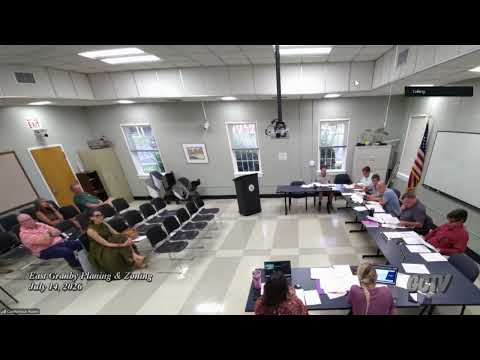
East Granby adopts zoning changes to comply with state middle‑housing law
Summary
The Planning & Zoning Commission approved text amendments to comply with Connecticut Public Act 25‑1, adding middle‑housing and summary‑review language, changing parking rules for small developments and authorizing parking‑needs assessments or fees in lieu for larger projects. The changes take effect July 30, 2026, pending filing.
The East Granby Planning and Zoning Commission voted July 14 to adopt zoning text amendments intended to bring the town into compliance with Connecticut Public Act 25‑1, the state law expanding rules for middle‑housing.
Georgie, the town planner, presented the package as "the bare minimum language to be in compliance with that written statute," saying the draft adds definitions for mixed‑use development and for a "summary review" process that lets eligible projects be approved without a public hearing. "It's essentially a light version of a site plan," Georgie said of the summary‑review pathway.
The amendments require towns to allow middle housing (two‑ to nine‑unit buildings) in zones that permit mixed uses and add a summary‑review procedure that can be handled administratively or by the commission, depending on local choice. In affected zones — including the Village Center and Commerce Park A and the Commerce Park transitional zone — mixed‑use developments would be eligible for summary review. The commission elected to keep such applications before the commission for review rather than delegate routine approvals to staff.
A key change concerns parking: for developments of 16 units or fewer the draft removes any minimum off‑street requirement, leaving parking to market forces and design standards; for projects of 17 units or more the existing schedule (one space per one‑bedroom/studio, two spaces per two‑bedroom, etc.) remains but a developer may submit a parking‑needs assessment. Georgie told the commission the law requires the town to condition approval on the lesser number of parking spaces if a valid assessment is submitted and accepted. "There shall be no minimum number of off street parking requirements for developments of 16 residential units or less," Georgie read from the draft.
Commissioners pressed for clarity on checks and balances when administrative approval is used. One commissioner asked what limits exist on a zoning officer's discretion; Georgie said the regulations retain existing review criteria and that the commission could instead choose to require commission approval. Several members expressed concern that the statutory changes reduce local control and said the town will need strong, specific findings to deny a project on public‑health or safety grounds.
The planner and commissioners acknowledged legal uncertainty: the statute is new and there is little case law to guide implementation, so the town adopted base language now with the option to revise procedures after experience and judicial interpretation.
The commission approved the amendment motion with an effective date of July 30, 2026, pending town‑clerk filing and publication. Georgie said staff will provide revised application forms and additional administrative guidance to help applicants and the commission implement summary review and parking‑needs assessments.
What happens next: the amendments set a procedural framework that will affect how small multifamily and mixed‑use projects are reviewed in East Granby. The commission noted it can revisit the rules in future meetings as developments arise or case law clarifies the statute.