Get Full Government Meeting Transcripts, Videos, & Alerts Forever!
Get email alerts on the Municipal Budget topic
No spam. Unsubscribe anytime.
Freeport staff: property-tax amendment could shrink taxable base, but near-term revenue rise cushions budget
Summary
City financial staff told council preliminary projections show a strong near-term property-tax increase but warned that a proposed state homestead-cap amendment could reduce the taxable base later, and recommended carrying unfinished capital projects into next year's budget.
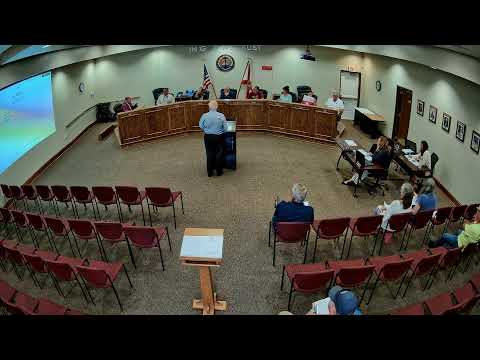
Bruce Simmons, the City of Freeport's financial director, told the council the city's recent revenue picture is better than feared but remains uncertain because of a proposed property-tax amendment at the state level. "We're getting about a 19% increase," Simmons said, summarizing current-year property-tax receipts and assessed-value changes.
Simmons showed staff estimates that put fiscal-year 2026 property-tax receipts near $7.8 million under current assessed values and noted an 11% growth baseline for the following year. He cautioned, however, that if the amendment passes its second-year provisions would create homestead exemptions and caps that reduce taxable value: "If you apply the 2nd year cap ... we would lose 428,000,000 ... which is a 27.4% total taxable value impact," a city analyst explained during the presentation.
Because department spending is running below budget this year, Simmons said funds are available to carry unfinished capital projects into FY27. "Some of our projects we weren't able to complete. We'll have to carry them into next year's budget," he said, and staff plans to meet department heads before the Aug. 3 workshop to firm up which projects to carry forward.
Councilors pressed staff for specifics on projects and suggested delaying or reprioritizing some items. One councilor urged holding three named projects for a year and reallocating funds to higher-priority needs, saying the city should be strategic about using limited dollars.
Simmons also flagged several capital items that are partly funded or under design, including a force-main extension (which he said could run into the millions if built), sidewalk bids that may vary widely from earlier estimates, and ongoing survey and design work for waterfront and park projects. He stressed that some grant programs (for example, the national/state working waterfront grant) require the city to show funds already allocated to qualify for match.
Simmons said staff will examine potential additional near-term revenues (capacity fees, state revenue sharing) and provide department-level salary and benefit details at the next workshop. The council agreed to have staff return with refined numbers and recommended options for carrying projects forward, adjusting capital priorities and setting any salary or benefits decisions after the Aug. 3 workshop.
The council did not take formal votes on budget items during the workshop; staff will present updated figures and project lists at the next scheduled meeting.