Get Full Government Meeting Transcripts, Videos, & Alerts Forever!
Get email alerts on the College Access topic
No spam. Unsubscribe anytime.
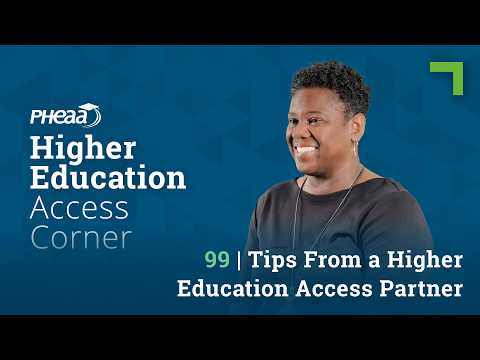
PHEAA access partner Tiffany DeVan offers back-to-school planning and financial-aid resources
Summary
Tiffany DeVan, a higher education access partner at the Pennsylvania Higher Education Assistance Agency (PHEAA), outlines practical back-to-school strategies—routine, workspace, time management, health and goal-setting—and points listeners to free PHEAA tools like pheaa.org, educationplanner.org and mysmartborrowing.org for FAFSA and financial-aid guidance.
Tiffany DeVan, a higher education access partner at the Pennsylvania Higher Education Assistance Agency (PHEAA), used a recent episode of the Higher Education Access Corner to offer practical steps for students and families preparing for the new school year. DeVan described routines, workspace setup, time management, health, and goal-setting as foundations for academic success and highlighted free PHEAA resources for navigating financial aid.
DeVan said listeners should “set up a routine, and try to stick to it as much as possible,” recommending gradual shifts in sleep schedules and weekly or daily to-do lists to avoid last-minute stress. She urged students to prepare an organized, quiet workspace, noting that reducing distractions can improve focus when completing applications or coursework.
On time management DeVan advised students who juggle athletics, jobs or family responsibilities to “practice good time management,” use digital calendars and break larger goals into shorter milestones. She also stressed physical and mental health, advising students to seek medical or counseling support when needed so health issues do not derail academic plans.
DeVan recommended both long-term and short-term goal setting—planning for the full academic year and for intermediate checkpoints such as the first quarter or holiday breaks—and encouraged students to meet with counselors to confirm they meet prerequisites for targeted majors and programs.
She urged early exploration of postsecondary options: attending college fairs (even in earlier grades), researching admission requirements and visiting campuses virtually or in person to assess fit and affordability. On testing and paperwork, DeVan told listeners to track deadlines for standardized tests (SAT, ACT, PSAT, ASVAB), admissions, scholarships, FAFSA and the Pennsylvania state grant so applications are submitted on time.
DeVan highlighted the role of access partners in supporting schools and counselors. “We have 13 access partners, and we’re strategically located throughout the Commonwealth of Pennsylvania,” she said, and added that access partners help with application paperwork and college- and career-planning events at no charge. She cautioned that some students who wait until the end of the year miss scholarship or grant deadlines and then rely on loans or delay plans.
For resources, DeVan pointed listeners to PHEAA’s main site pheaa.org (including the annual booklet Beyond High School), educationplanner.org for college and career planning, mysmartborrowing.org for borrowing guidance, and youcandealwithit.com for financial literacy. She advised counselors who feel overwhelmed by a “FAFSA mandate” to reach out to access partners for support.
The episode closes with DeVan urging listeners to find their regional access partner via pheaa.org’s contact page; she listed the counties she covers—Dauphin, Juniata, Mifflin, Northumberland, Perry, Schuylkill, Snyder and Union—and reiterated that PHEAA’s resources and publications are free. The episode ends with a call to connect early so students and families can avoid missed deadlines and better plan for college and career paths.