Get Full Government Meeting Transcripts, Videos, & Alerts Forever!
Get email alerts on the Land Use Data Centers topic
No spam. Unsubscribe anytime.
Troy council raises questions about data centers’ local impacts; no ordinance proposed
Summary
Councilmembers discussed worries about data centers — energy use, water demand and land suitability — and asked administration for information on zoning and options; no legislation or vote was taken.
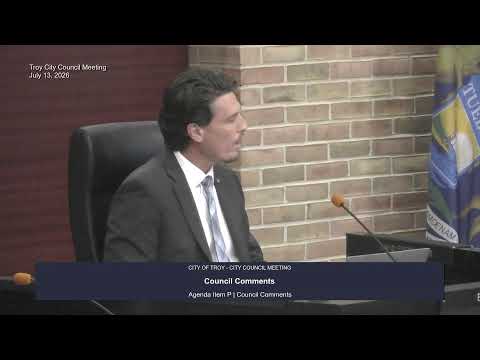
Councilmembers used the July 13 meeting to raise and explore potential local impacts from data centers, including power and water demands and whether zoning controls should be pursued.
"Data centers can be disruptive in some ways," Councilmember Brooks said, noting constituent concern and national attention and urging the city to be proactive in protecting residents’ health, safety and welfare.
Councilmember Chamberlain said Troy is largely built out and that high land values and the city’s master plan make large data centers less likely, but she encouraged staff to gather examples and resources — including materials from the Michigan Municipal League — and report back. "We'd have to work with what's been established," Chamberlain said, emphasizing the need to understand existing routes and authorities before proposing local changes.
Councilman Vergatti warned specifically about utility strain: "The biggest concern is the electric use... Even though they pay their share, we lose electric here anyways," he said, adding that large centers could require new grid infrastructure and consume millions of gallons of water per day.
Mayor Baker said the council has limited authority over grid and water rules and recommended focusing on zoning and regulatory approaches the city can control locally; he asked the administration to provide information on existing zoning allowances and special-use requirements.
No formal motion, ordinance or vote took place; councilmembers suggested follow-up briefings and possible administrative research to clarify what Troy can regulate at the local level.