Get Full Government Meeting Transcripts, Videos, & Alerts Forever!
Get email alerts on the Public Safety Fire Ems topic
No spam. Unsubscribe anytime.
Muskego committee hears study recommending phased move toward municipal fire/EMS and a referendum to fund it
Summary
Consultants told Muskego aldermen July 14 that Test Corners fire/EMS is 'functional yet fragile' and recommended a phased transition to a municipal model — including hiring a chief and 12 firefighter‑paramedics — and a five‑year funding plan that would be put to voters via referendum.
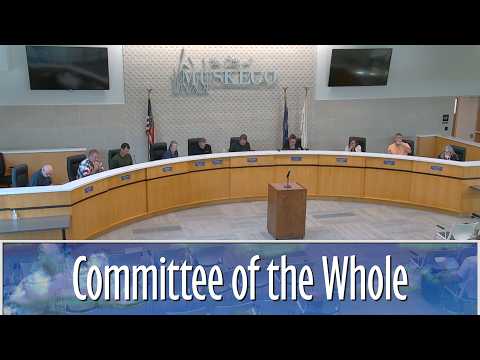
The Muskego Committee of the Whole heard a presentation July 14 from Innovative Public Advisors, which concluded the Test Corners fire and EMS service is "functional yet fragile" and recommended a phased plan that could lead to a municipal fire/EMS department funded, in part, by a voter referendum.
The consultants, including Jay Shambo and Jess Wilds of Innovative Public Advisors and Paul Stevens, a former fire chief, told aldermen they found a department that performs well today but is vulnerable because a small number of people do a disproportionate share of the work and succession planning is limited. "Functional yet fragile" was a phrase repeated by the consultants to describe the department's current state.
Why it matters: the study frames a near‑term choice for city leaders. Consultants recommended forming a transition committee, hiring a municipal fire chief or administrative officer to lead planning, adding supervisory shift staff, and ultimately hiring 12 full‑time firefighter‑paramedics to create regular 24/7 coverage. Councilors were told those steps are intended to preserve service reliability as volunteers age and call volumes grow.
Consultants walked the council through funding scenarios. They said a five‑year funding projection for the phased plan totals roughly $4.4 million (the study breaks out about $3.7 million tied to salaries and benefits and the balance for other operating and capital needs). The presentation noted the city could pursue competitive SAFER grants to offset some costs; SAFER is a multi‑year federal program the consultants said they have successfully applied to in other communities.
"There is enough time to inform your constituents between now and November," Jay Shambo said, urging early public information work if the council chose a November referendum. Paul Stevens, the study's fire expert, urged a transition committee be formed as soon as the third or fourth quarter of 2026 to steward operations and relationships with Test Corners during any change.
Council reaction split between urgency and caution. Several aldermen pressed the consultants for additional scenarios — asking for more explicit comparisons with merging, contracting with neighboring municipal departments, or a privately contracted EMS provider — and requested a list of stakeholders interviewed for the study. "I feel like this is steering us toward one thing and not giving us other suggestions," one alderman said, asking for a fuller set of alternatives before putting a question to voters.
Volunteers and former chiefs offered public comment. Phil Dibb, a prior chief and member of Test Corners' board, told the council the department was "running very thin," cited about 2,200 calls a year and said many volunteers are older or close to retirement. Another long‑time volunteer warned the timeline felt too compressed and urged more public education. Mary Dib, who identified herself as a firefighter's spouse, said younger recruits need full‑time jobs with benefits to stay, and that paying for sustainable positions would help with retention.
Dissolution and assets: aldermen also asked how a dissolution agreement with Test Corners would treat buildings and equipment and whether the city would pay fair market value for assets purchased before a stated cutoff date in that agreement. Consultants and the mayor said the dissolution clauses would be addressed through the transition committee and legal review; they told the council the scholarship fund referenced in the agreement is already funded.
Next steps: the mayor said staff would return at the next meeting with a timeline and more detailed referendum language and financial impact figures. Councilors agreed to continue the conversation; the consultants offered to provide a supplement explaining other options they considered and the basis for their recommendation.
Procedural action: at the end of the session the council voted 7–0 to convene a closed session under WIS. STAT. ch. 19.85 to discuss personnel matters; it said it would reconvene only to adjourn.
The consultants left the meeting available for follow‑up questions and the council scheduled further discussion of funding and referendum language at its next meeting.