Get Full Government Meeting Transcripts, Videos, & Alerts Forever!
Get email alerts on the Driveway Permit topic
No spam. Unsubscribe anytime.
Erath County court weighs standardized driveway-permit policy and fees, including county installation option
Summary
Commissioners reviewed a proposed county driveway-permit policy that would require permits, classify driveway types, and create a permit-and-installation fee schedule; the court debated permitting, enforcement and whether the county should perform installations for a fee or allow private installs with higher inspection charges.
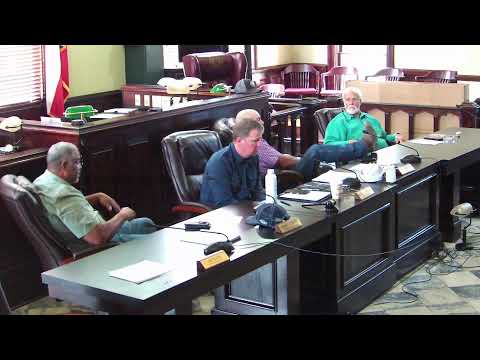
Erath County Commissioners Court reviewed a proposed driveway-permit policy July 15 that would formalize permitting, standardize classification of driveway types and create a fee and inspection framework for private and county-installed driveways.
Staff (Speaker 2) presented a draft policy that trims longer templates into a simpler permit form and groups driveways into residential, commercial and rural/pasture categories. That draft would tie driveway permitting to 911 addressing and set minimum technical requirements—Speaker 2 said county paperwork will reflect safety criteria such as sight distance and pipe sizing.
Commission discussion centered on whether the county should offer installation services at a set fee or allow property owners to install their own culverts subject to a permit and follow-up inspection. Commissioners proposed a graduated-fee approach keyed to pipe length and installation complexity. "If they install it themselves, ... you could have a permit fee; or county installation of cover is $55," Speaker 7 suggested during the debate; others referenced a $500 county-installation example while proposing a lower permit-only fee for self-installation.
Technical minima were discussed: staff proposed a minimum driveway culvert interior diameter of 18 inches and a minimum length of 30 feet; commissioners asked staff to include provisions for additional loads and to require proof-rolling where appropriate. Several members emphasized enforcement tools: tying permits to 911 addressing so the county can withhold addresses, penalties and citations for noncompliant unpermitted driveways, and mechanisms to remove unsafe installations.
Speakers repeatedly said the county needs a practical, enforceable policy that balances public-safety concerns and county workload. "We need to be charged ... that way we got control. We know where they're at," said Speaker 5, supporting a permit and inspection approach that documents installations. Staff pledged to work with the county attorney to finalize legal language permitting denial of addresses or other administrative enforcement where supported by statute.
The court asked staff to return a drafted fee schedule and enforcement language with sample permit forms for future consideration.