Get Full Government Meeting Transcripts, Videos, & Alerts Forever!
Get email alerts on the State Legislation topic
No spam. Unsubscribe anytime.
State Rep. Cindy Golding urges Alburnett to prepare ordinances on data centers and details local impacts from new property‑tax law
Summary
Representative Cindy Golding told the Alburnett City Council on July 9 that cities should adopt local ordinances to require transparency from large data‑center proposals and described compromises in a recent property‑tax bill that affect TIF and grant eligibility; she asked councils to provide specific local examples of harm to guide future fixes.
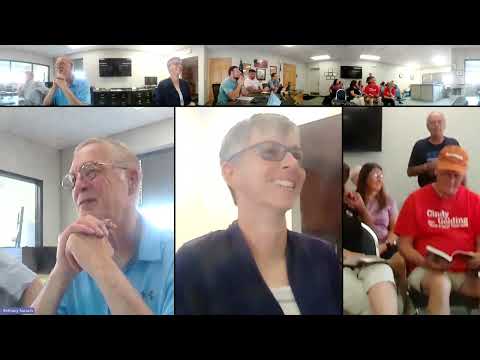
Representative Cindy Golding visited the Alburnett City Council on July 9 to press two priorities for small towns: adopt local rules to manage incoming data‑center projects, and provide detailed examples of how recent property‑tax changes affect municipal budgets.
Golding, a state lawmaker, said municipalities need ordinances in place before large data‑center companies buy and annex farmland. “You need to have your ordinance on the books before that happens,” she said, arguing that transparency requirements — about energy and water use and potential impacts on ratepayers — should be mandatory so communities can plan for consequences. “I want you to know I’m not against data centers. I am against secrecy,” Golding told the council.
Golding described other concerns cities have reported from large installations in neighboring states: road damage, heavy traffic and, in some cases, water systems stressed after a center left a community. She said transparency provisions she drafted focused on asking companies how much energy and water they would use, the source of those supplies, and how excess heat or electricity would be handled.
On property taxes, Golding summarized the compromises that survived a recent 42‑page bill: a 20‑year limit on some TIF agreements, tightened caps on reserves but an allowance for designated project funds, and exemptions retained for certain employee and insurance costs. She said details of the bill’s impact vary by jurisdiction and urged Alburnett officials to identify concrete examples where the law had negative consequences.
Council members asked about TIF terms and how changes would apply by project versus district; Golding said the 20‑year term applies per agreement and that nuance would depend on local practice. She also encouraged the council to collect specific, local budget examples — such as impacts to fire‑department costs or employee benefits — to bring back to legislators as part of efforts to refine the law.
The council heard Golding’s presentation with follow‑up discussion; no formal council action was taken at the meeting. Staff and council members said they would collect details to share with the representative ahead of the next legislative session.
The representative’s full remarks and council questions are recorded in the meeting transcript. The council took up unrelated agenda items after the presentation.