Get Full Government Meeting Transcripts, Videos, & Alerts Forever!
Get email alerts on the Land Use Development topic
No spam. Unsubscribe anytime.
Clinton planning commission approves preliminary Creighton Ridge development review, requires road bond and city transfer
Summary
The Clinton Planning Commission voted 07/14/2026 to approve a preliminary development review for the Creighton Ridge subdivision with a condition that Creighton Ridge Drive be bonded and incorporated into the city road system; the annexation and zoning request drew lengthy public testimony and a pending county appeal remains unresolved.
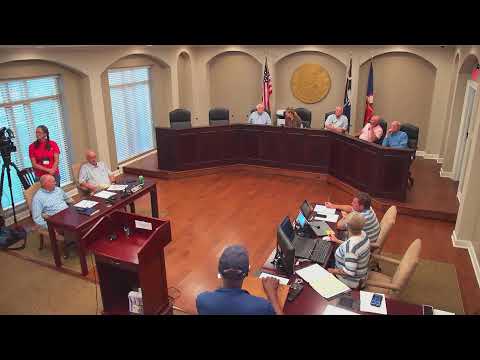
The Clinton Planning Commission on July 14 approved a preliminary development review for the Creighton Ridge subdivision while conditioning approval on the developer bonding Creighton Ridge Drive and transferring responsibility for that road to the city.
Cochair Heather Tiller made the motion to approve the development review “with a contingency that Creighton Ridge Drive be bonded and fall under the city road system,” and a commissioner seconded; the commission carried the motion on a voice/hand vote (no individual tallies were recorded in the transcript of the meeting). The commission emphasized that its recommendation goes to city council, which retains final authority over annexation and zoning.
The vote followed a presentation by developer Patrick Nair of Miranda Homes/Veranda, who said the company is proposing a city annexation and mixed zoning for about 300 acres along Highway 56. Nair said the firm is asking for a plan limited to a maximum of 490 lots, down from an earlier county‑filed plan for 523 lots, and that the revised proposal includes a roughly 11‑acre central park, clubhouse, pool and a small retail parcel intended for restaurants, grocery or daycare. “We will do a 490 lot maximum,” Nair said during his presentation, and he described the plan as a phased project he estimates would take 10–12 years.
Nair and his representatives told the commission they had completed due diligence materials — including a wetlands report they said showed no structures would be placed in wetlands or floodplain — and a traffic study that, they said, recommended turn lanes paid by the developer. The developer also proposed a development agreement to lock in lot sizes, minimum spacing (he offered 18 feet between house pads, above the city minimum), covenants limiting certain commercial uses and a 10‑year limit on the approval to encourage project completion.
Supporters at the public hearing framed the project as an economic opportunity. Daps Davis, president of the Lawrence County Chamber of Commerce, said Clinton needs housing so businesses and new employers can attract workers: “Growth is not something that happens after businesses arrive. It’s what allows businesses to survive,” he told the commission. Other supporters — residents and regional economic development officials — said rooftops draw retail and industry and urged the city to approve measured, quality growth.
Opponents raised concerns about traffic, stormwater, environmental impacts and an active legal dispute at the county level. Several residents who live along Bush River and Shell Creek described recent flooding and siltation problems tied to nearby development and urged additional hydrologic review; one suggested the Corps of Engineers or state regulators be asked to evaluate flood risk before annexation proceeds. Charlotte Strickland and other neighbors said the proposed mix of R‑1/R‑2S/R‑3S and commercial zoning would be out of character with nearby neighborhoods and increase congestion on Highway 56.
Michael Corley, deputy director of the South Carolina Environmental Law Project, urged caution on jurisdictional grounds. He told the commission the Lawrence County Planning Commission had unanimously denied the project and that the developer successfully challenged that denial in circuit court; Lawrence County has appealed to the South Carolina Court of Appeals. Corley said acting on annexation while the county’s appeal is pending could “dissolve” the county process and undercut the pending appellate review.
Commission discussion before the motion focused on protecting existing residents and the city from construction impacts. Commissioners and staff asked for documentation required to accept roads into the city system, discussed requiring performance and maintenance bonds to cover construction damage, and said the city would inspect roads to ensure they meet specifications before formal acceptance. Staff told the commission that portions of Creighton Ridge Drive are currently privately owned and that the developer must provide the materials needed for any transfer.
The commission’s approval on July 14 covered the development‑review stage with a specific contingency about Creighton Ridge Drive bonding and transfer; it did not grant annexation or final zoning. City council retains final decision‑making authority on annexation and zoning and the commission's recommendation will be forwarded to council for consideration.
Next procedural steps identified at the meeting include: staff verification of bonding/inspection documentation and preparation of a development agreement if the city pursues conditions; city council review of annexation and zoning; and, separately, the unresolved county appeal of the earlier county planning commission decision. The transcript does not record an exact vote tally or the final council schedule; those details were not specified in the record provided.