Get Full Government Meeting Transcripts, Videos, & Alerts Forever!
Get email alerts on the Fleet Management topic
No spam. Unsubscribe anytime.
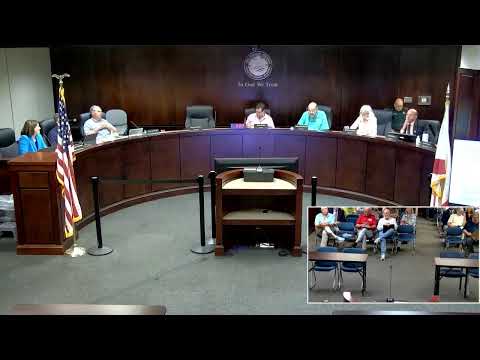
Commissioners and public press county staff for data before $8 million in vehicle buys
Summary
Commissioners and a public commenter urged staff to centralize fleet and mileage data, consider surplus or auctions, and run an operational cost‑benefit review before approving roughly $8 million in proposed vehicle and equipment purchases.
County budget staff recommended removing a proposed vessel purchase from the machinery and equipment budget for environmental services and pursue surplus or public‑private partnerships instead; commissioners and members of the public used the item to raise broader concerns about county fleet purchases.
Melissa (budget staff) told the board staff would "remove that from the current year budget and work with the sheriff's office and other private and public partnerships to see if we can utilize other vehicles." Several commissioners said they supported delaying the purchase and asked staff to consider surplus options or sharing arrangements with the sheriff's office.
Commissioner (District 4) said she has proposed about $2.4 million in cuts she would like staff to review and said elected officials should examine mileage and maintenance records before replacing vehicles. "I just think there's a little bit more cutting that we can do in those," she said.
Bob Brooke, a member of the public, asked whether the county records who logs mileage and whether vehicles are for official use only, urging better data collection to allow a cost‑benefit analysis before buying more cars: "I just think to do the analysis that you need to do, you need to have this kind of data."
Staff and agency officials described current tracking practices: fuel pump entries and shop work record mileage, heavy public‑works vehicles have GPS, and Justin (fleet) evaluates vehicle condition before replacements. Staff conceded the fixed‑asset and fleet‑maintenance systems are separate and said they are working to centralize data so mileage, assignments and maintenance histories can be reviewed together.
Several commissioners and staff recommended an operational audit to assess fleet utilization, take‑home vehicle policies, and opportunities to reuse or auction underutilized county vehicles rather than buying new ones. The vehicle list under review contains nearly $8,000,000 in proposed purchases, according to commissioner comments.
Next steps: staff said they will coordinate with fleet and public‑works to improve analytics and provide the board with documentation; commissioners indicated they will propose cuts and may request an operational audit to validate needs before approving purchases.