Get Full Government Meeting Transcripts, Videos, & Alerts Forever!
Get email alerts on the Teacher Pay topic
No spam. Unsubscribe anytime.
Hernando negotiators spar over using TSIA funding to boost 10‑year teachers’ pay
Summary
District staff proposed using state TSIA funds to provide roughly $2,000 to qualifying 10‑year classroom teachers and allocating $809,000 to increase other instructional staff pay (an estimated $550 base raise); union representatives pressed for clarity on band reconfiguration, fringe calculations and the long‑term budget impact.
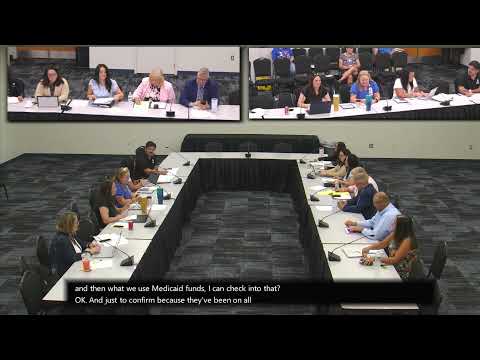
District negotiators and union representatives met to work through a package of pay increases that combines state TSIA funds and district contributions, with staff proposing a roughly $2,000 one‑time or near‑term payment for qualifying 10‑year classroom teachers and an $809,000 pool to increase base pay for other instructional staff.
The proposal, presented by Matt Goldrick, director of labor relations and professional standards, frames the TSIA allocation as a time‑sensitive state grant and identifies a district contribution that staff say has compounded over prior years. "We think it's gonna be roughly around $2,000," Goldrick said when describing the per‑teacher payment for the qualifying group, and he explained the remaining $809,000 would be spread across other returning staff, producing a cited estimated $550 increase in base salary for that group.
Union leaders pushed back on mechanics and equity. Lisa Masserio, HCTA president, said the union intended the $809,000 as a "starting point" and warned that reconfiguring pay bands to reallocate funds could amount to pay reductions for employees already in higher bands. "When we are losing about a 100 people in the instructional unit ... part of that equation is they can't afford to continue working in a job," Masserio said, urging solutions that "value the commitment" of teachers in Hernando County.
Staff and union ran through the math in the room. District staff noted the $809,000 figure includes fringe costs and that fringe for the year is calculated at a multiplier of 1.2244 (22.244%). Participants discussed differences between budgeted and actual line‑item figures—union members pointed out the instructional staff salary line had been budgeted at $93,000,000 while spending in the prior fiscal year was about $96,000,000—and staff said the line is not funded dollar‑for‑dollar but at an implementation percentage that accounts for vacancies.
The parties also examined whether performance pay is an allowable use of TSIA funds this year; multiple participants said TSIA did not include performance pay in the current allocation and asked staff to confirm statutory language and timing. Kim Hudson, service unit director for the Florida Education Association, cited the statute reference discussed at the table and urged the group to review the statutory text to confirm allowable uses.
No formal vote or agreement was reached. Negotiators scheduled follow‑up work: staff agreed to provide a rolled‑up roster and updated fund‑balance information, and the parties planned another bargaining session next week and additional meetings to confirm the fringe and statutory details that will determine final calculations.