Get Full Government Meeting Transcripts, Videos, & Alerts Forever!
Get email alerts on the Arts And Culture topic
No spam. Unsubscribe anytime.
Council leans toward hybrid arts-management model; artists urge protections for BRECKCREATE and local studios
Summary
After a consultant report recommending a hybrid shared-responsibility model for arts and culture, Breckenridge council signaled support for town ownership of facilities with resident organizations running programming. Local artists and residents at public comment urged safeguards for BRECKCREATE, studio space protections, and prioritizing local artists in any RFPs.
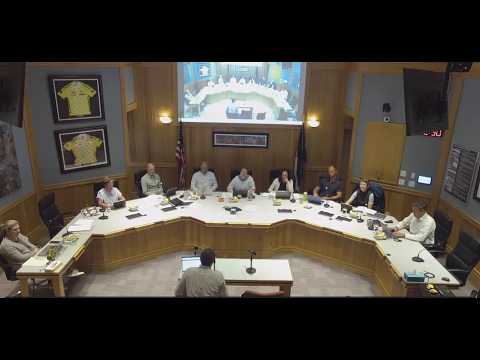
The Breckenridge Town Council signaled July 14 that it supports pursuing a hybrid, shared-responsibility approach to arts-and-culture governance — a model in which the town would retain facility ownership while resident organizations operate programming — but councilors and community members emphasized the need for careful detail work, protections for local studios, and clear metrics.
Julia (consultant) presented SSG’s final report and summarized 14 recommendations, focusing on four near-term items: adopt the hybrid shared-responsibility model; transfer facility-management oversight to the town (town as landlord); formalize an arts-and-culture committee to advise policy and shared services; and enter direct facility agreements with Breck Film and Backstage Theater. She said those agreements would include performance metrics in later contracts and that initial agreements could be simple updates until the cultural master plan is complete.
Councilors broadly supported the hybrid direction but repeatedly cautioned that details matter. Council member Marika Page and others said they favored the model in concept but want to retain oversight and ensure resident organizations’ expertise remains central. “I like the hybrid shared responsibility model,” Page said, while adding she would not formalize committees or contracts until reporting structures and responsibilities are clearer.
Several councilors urged starting practical steps that provide clarity to resident organizations: short-term updated agreements with Breck Film and Backstage Theater, time-limited contracts or one-year agreements to give operational certainty, and a visioning exercise that aligns metrics with the forthcoming cultural master plan.
The work session preceded a long public-comment period during the evening meeting in which artists, instructors and residents urged the council to protect BRECKCREATE and local studio space. Kia Neal, a BreckCreate instructor and local artist, described BreckCreate’s ceramics studio as a vital community space that “creates connection” and asked that whatever changes occur provide capacity for the arts campus to grow. Multiple speakers asked the council to avoid RFP processes that would put local studios in direct competition with regional or private operators and urged metrics that do not prioritize ticket revenue at the expense of grassroots community programming.
Why it matters: The town invests millions annually in arts and culture; how it governs facilities and funds resident organizations will shape local access to studio space, community programming and the region’s cultural identity. Council direction toward a hybrid model sets an implementation path but leaves substantial operational, contractual and funding details for staff and residents to work out.
What’s next: Staff and consultants will draft the next steps — updated agreements, visioning work, and recommended metrics — and return to council. The cultural master plan is expected to provide additional guidance when drafts are available through early 2027.
Provenance: SSG presentation and council discussion SEG 1949–2595; public comments on arts district SEG 2720–3149.