Get Full Government Meeting Transcripts, Videos, & Alerts Forever!
Get email alerts on the Branding topic
No spam. Unsubscribe anytime.
San Marcos council hears new city brand; staff says HOT funds will cover rollout
Summary
City staff and NorthStar consultants presented a new community brand rooted in resident research and funded entirely with hotel‑occupancy‑tax revenues; staff recommended a phased rollout (digital first) and emphasized the city seal will be retained alongside the new logo.
San Marcos City Council on Tuesday reviewed a proposed community brand developed with consultant NorthStar Place Branding and staff, who said the effort was funded entirely with hotel‑occupancy‑tax (HOT) revenues and did not use resident property taxes.
Consultant Sam Preston described the branding process as grounded in research and community input and introduced a ‘‘DNA’’ statement intended to position San Marcos as a distinctive place ‘‘between Austin and San Antonio’’ that highlights springs, downtown culture and a creative identity. Lauren Surly, the city’s director of communications and intergovernmental relations, told the council the rollout will be phased, starting with digital platforms and templates and moving to physical replacements only as items reach normal replacement cycles.
"A strong community brand is about much more than a logo. It's not just an image. It's the way that it makes you feel," Surly said, explaining staff would help departments apply the brand consistently.
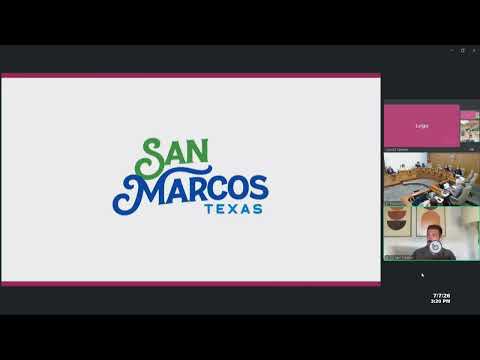
Preston showed a new logo and visual direction that uses flowing typography and blue‑green tones to evoke the city’s springs and river. The presentation included execution ideas—gateway signs, wayfinding, vehicle and staff apparel, merchandise and commemorative materials for San Marcos’ 175th anniversary—and creative elements that reference local natural history, including the Texas blind salamander.
Staff emphasized funding and limits: "This initiative is funded entirely through hotel occupancy tax or HOT revenues," a staff presenter said, and added that state law restricts HOT revenues to tourism‑related promotion and marketing, not general fund services. Council members asked for clarification about existing gateway signs, lighting and potential costs; staff noted a TxDOT program can help fund landscaping and that an existing lighting issue was caused by an incorrect power source being installed and is being corrected.
Council feedback ranged from preferences for specific sign treatments and parking orientations to requests for a detailed list showing what would be added or removed under the concepts presented. Several council members asked staff to preserve the city seal where appropriate and to provide a careful, phased implementation plan to avoid unnecessary replacements. Staff said licensing and some initial digital changes could begin at the end of July or in early August, depending on council direction.
Staff will return with additional details and implementation guidance at a future work session.