Get Full Government Meeting Transcripts, Videos, & Alerts Forever!
Get email alerts on the Land Use Development topic
No spam. Unsubscribe anytime.
San Marcos council approves Sedona South development agreement with waste‑services exclusion
Summary
Council approved a development agreement covering roughly 643 acres in the ETJ for the Sedona South project, adding restrictions and community benefits and adopting an amendment to exclude waste‑related services; staff and the developer said infrastructure phasing will be market driven.
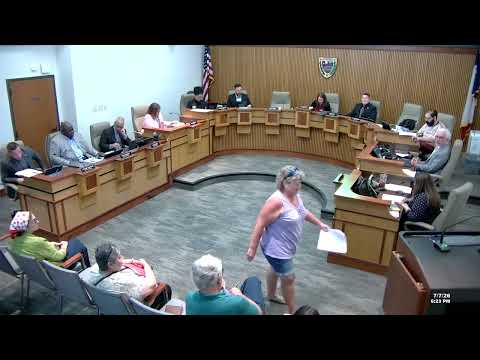
San Marcos City Council on July 7 approved a development agreement with the Sedona South developer for roughly 643 acres near State Highway 123 and FM 1978, adding conditions to protect adjacent neighborhoods and an amendment explicitly prohibiting waste‑related services in the project.
Terry Floyd, director of planning and development services, presented the package that would primarily allow single‑family residential development (about 530 acres), set aside roughly 50 acres of open space and about 47 acres for commercial, light industrial and multifamily uses. Floyd told council the agreement includes a city‑owned tract envisioned for a wastewater treatment plant and described requested waivers from standard city development requirements—such as alley access for narrow lots, longer allowable dead‑end streets, reduced lot‑width minimums in the ETJ, and higher cut‑and‑fill standards for grading.
“Remember this is in the ETJ,” Floyd said, referring to the city’s extra‑territorial jurisdiction, and he confirmed that city review of plats and watershed protections will still apply even though most of the land is outside city limits.
Residents who live near FM‑1978 told council they were uncertain about map details, buffer widths and which parcels would be developed first. One homeowner asked when south‑side construction would begin; the developer, Nathan Gentry, said utilities typically start in the north, nothing was slated to start for at least a year, and phasing would be market‑driven and set during preliminary plats.
Councilmember Gonzales moved an amendment (based on a Planning & Zoning suggestion) to remove waste‑related services from allowed uses; the council adopted that change and then approved the overall development agreement. Following the vote, staff and the developer discussed additional design measures for the treatment plant site (landscaping, berms, architectural fencing and visitor parking for a cemetery shown on the concept plan).
The agreement also commits the developer to provide parkland and privately‑maintained open spaces, constructs sidewalks and shared paths in specified locations and limits multifamily density (no more than 24 units per acre and no more than 50% of the mixed‑use acreage to be multifamily). Council and staff also negotiated a community benefit provision that could require a capped contribution (up to $5 million) toward a future fire station in the development area.
Council approved the amended development agreement unanimously. Staff said any preliminary plats, phasing plans and site plan reviews will be posted to the city’s interactive mapping and that particular infrastructure or annexation steps would be considered later if the developer seeks annexation for the city‑owned treatment plant site.