Get Full Government Meeting Transcripts, Videos, & Alerts Forever!
Get email alerts on the School Finance topic
No spam. Unsubscribe anytime.
Toledo Public Schools board certifies 6.9‑mill property levy to appear on Nov. 3 ballot
Summary
After weeks of budget review and a tense discussion about declining carryover, the Toledo Public Schools Board of Education voted to certify a resolution of necessity for a 6.9‑mill property tax levy that the board will seek to place before voters on Nov. 3, 2026. The treasurer estimated the levy would raise about $22.8 million annually; an alternative 1% earned‑income proposal was discussed but not advanced.
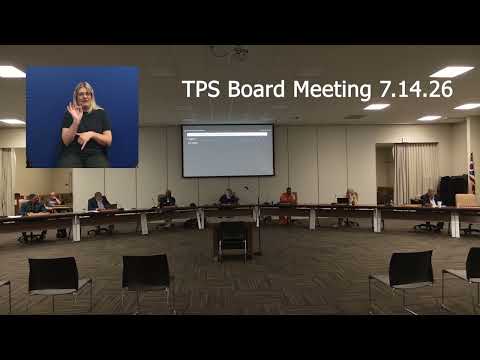
The Toledo Public Schools Board of Education voted July 14 to certify a resolution of necessity asking the Lucas County Auditor to certify a 6.9‑mill property tax levy for the Nov. 3, 2026 ballot.
Mr. Lockwood, the district treasurer, told the board the district closed the fiscal year with roughly $9.9 million in carryover and has run multi‑year deficits that "are well over $100,000,000" across four years. "We ended the year at $9,900,000," he said, adding that one payroll cycle can represent about $8.7 million in obligations and that low liquidity could jeopardize the district's ability to meet payroll after unforeseen costs.
The treasurer estimated the 6.9‑mill levy would generate about $22.8 million a year and said that amount could keep the district solvent "at least to 2030" under current forecasts, while acknowledging the many variables that affect long‑range projections. Board members pressed for clarity on the numbers; Lockwood provided year‑by‑year end‑of‑year deficit figures: 2023: $21.4 million; 2024: $32.8 million; 2025: $48.2 million; 2026: $24.0 million.
Board members and staff also discussed an alternative: a 1% school district income tax. Lockwood said the 1% earned‑income option would raise roughly $33 million annually, but several trustees and the district's consultants warned that voter appetite for an income tax is uncertain and that polling historically favors property levies in the district.
Dr. Durant, the superintendent, and district legal and campaign consultants told the board that the district had used approximately $170 million in federal ESSER funds during the pandemic era to support programs and positions that are not self‑sustaining, creating a fiscal ‘‘cliff’’ when that funding ended. Dr. Durant said the consultant advised the district to pursue a property‑tax levy given the district's voting history and the limited campaign window.
Board members debated the tradeoffs. Ms. Gerken, who asked for the breakdown of recent deficit years, said she feared a 6.9‑mill levy would be "an oxygen tank" rather than a long‑term fix; others said the community might accept the property levy and urged clear, consistent messaging. Ms. Barnes urged the board to become active messengers in the community and to counter misinformation surrounding tax options.
Pastor Parker read the formal resolution declaring it necessary to levy the additional 6.9 mills for current expenses for five years and requested certification under Ohio Revised Code sections 5705.03 and 5705.21. The motion to adopt the resolution was moved and seconded; the roll‑call vote recorded support from the five board members present and the resolution passed. The board did not move the separate income‑tax resolution.
Next steps: the treasurer will deliver a certified copy of the adopted resolution to the Lucas County Auditor for certification; the board must file ballot language with the board of elections by Aug. 5, 2026, to meet the deadline for the Nov. 3 ballot.
The meeting concluded with the board adjourning after brief final remarks from the superintendent and members.