Get Full Government Meeting Transcripts, Videos, & Alerts Forever!
Get email alerts on the Youth Suicide Prevention topic
No spam. Unsubscribe anytime.
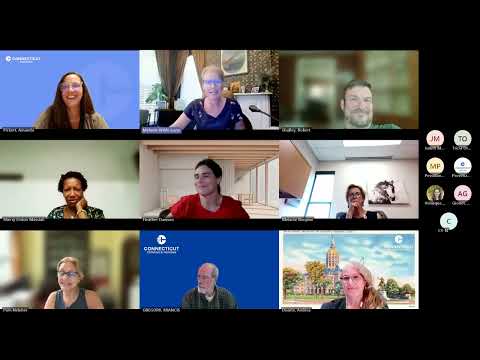
State mental-health official updates board on Garrett Lee Smith grant and 988/Gizmo outreach
Summary
Andrea Duarte reported the statewide Garrett Lee Smith youth suicide-prevention grant has completed its first year in four school districts and the team has developed Gizmo curriculum materials and 988 promotional toolkits for schools, with limited distribution and planned outreach events.
Andrea Duarte, of the Connecticut Department of Mental Health and Addiction Services, told the advisory board that the state’s Garrett Lee Smith youth suicide-prevention grant has finished its first year of implementation in four school districts and is focused on a K–12 approach to screening, referral and follow-up.
“We just finished our first year of implementation with four school systems — Darien, Wallingford, Thompson and Vernon — and they are doing a K through 12 approach to updating policies, screening, referral and follow-up,” Duarte said. She described an emphasis on aligning school protocols with suicide-prevention best practices and on partnering with community collaboratives to support district implementation.
Duarte outlined curriculum and outreach products produced under the grant, including materials developed with the Gizmo program and a new 988 resource page. “We developed a resource page on the Gizmo website on 988,” she said, adding that the materials include brochures, stickers, videos and social media assets that local sites can download. Duarte said distribution has been limited so far because of shipping costs, but the artwork and resources are available for local use.
The update also noted an implementation plan to promote 988 broadly: the team is preparing a cinema preview tied to a major film release and is developing a Gizmo 988 toolkit to help districts place 988 information on student ID cards where state law requires it. Duarte said the toolkit work included coordination with the state suicide advisory board and alignment with 911/988 education content.
Duarte urged the board to consider the role of students and community partners in spreading the messaging and highlighted that much of the Gizmo development has involved graduate social-work and public-health students. She said student involvement has benefited the program and led some students into prevention careers.
The advisory board did not take formal action on the grant update. Duarte concluded by inviting members to use and share the Gizmo resources and by saying the state will continue to refine distribution and promotion strategies.
The board scheduled its next substantive meeting on the topic of funding and braiding for October and will circulate follow-up materials and links to the Gizmo resources in meeting minutes and in the chat.