Get Full Government Meeting Transcripts, Videos, & Alerts Forever!
Get email alerts on the Data Center Zoning topic
No spam. Unsubscribe anytime.
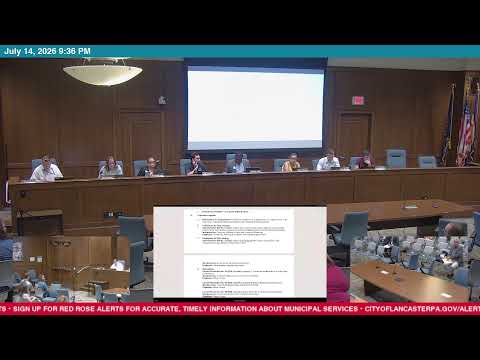
Lancaster City Council approves interim zoning limits for data centers after hours of public comment
Summary
After more than three hours of public comment, Lancaster City Council voted July 14 to adopt a zoning text amendment that restricts future large-scale data centers to a limited set of parcels, adds performance and reporting requirements, and clarifies grandfathering for two previously negotiated projects.
Lancaster City Council on July 14 voted to adopt a zoning text amendment intended to limit where large-scale data centers can be sited and to add new performance and public‑reporting requirements.
Council President Ahmed framed the vote as a defensive measure: "This is in no way pro data center legislation, and we are not voting on approving new data centers," he said, urging colleagues to put protections in place now while continuing to refine the rules.
The ordinance—administrative bill 10-20-25 as read into the record—formally recognizes "computed data centers" as a use requiring special regulation, limits potential siting to 16 suburban‑manufacturing parcels, and requires applicants to provide studies and plans on noise, decommissioning and resource use. Council moved and adopted a clarifying amendment to Section 6(b) that states data centers that had made a complete application for city permits or for land‑development approval prior to June 24, 2026, will be subject to the zoning rules in effect on that date; council said the language was intended to reflect prior community benefits agreements negotiated before the new text.
The measure drew sustained public opposition at the hearing. Residents and advocates urged a pause—or moratorium—on new data center approvals and called for additional protections, including energy‑capacity assurances from utilities, water‑feasibility studies, infrasound and vibration monitoring plans, and virtual options for community meetings. "We are demanding that you enact 180 day pause on any data center development so that we can find a way to keep them out of our communities," said Cameron Robinson, a Lancaster resident in public comment.
State Representative Nikki Rivera, who addressed the council during the public comment period, said the state legislature is considering multiple bills that could change municipal authority and oversight of data centers, including a bill that would require annual reporting of energy and water use. "The 1st 1 I would ask you to push for is house bill 18 34," she told attendees, urging citizens to contact state senators.
Council members who supported the ordinance argued the draft cuts off most potential industrial sites for data centers—estimating a more than 90% reduction in available industrial parcels—and said interim protections were legally and practically the best option while the city continues to refine the language and pursue additional safeguards. Several councilors pledged to work with staff to return later in the year with stronger, more specific language recommended by the Lancaster County Planning Commission and other reviewers.
The council took the final vote after extended public comment and legal Q&A about the limits of curative amendments and moratoria under Pennsylvania law. The amendment and the administrative bill, as amended, passed on a roll‑call vote.
Council and staff said the ordinance is a first step and promised a near‑term process to pursue additional technical requirements and enforcement mechanisms. The adoption imposes new special‑exception procedures and reporting expectations for future data‑center proposals; it does not retroactively alter the terms of the two sites that council and staff said were negotiated under earlier community benefits agreements.