Get Full Government Meeting Transcripts, Videos, & Alerts Forever!
Get email alerts on the Police Oversight topic
No spam. Unsubscribe anytime.
Spokane police ombuds office reports increased contacts and issues 13 recommendations; privacy-wall, protest review remain outstanding
Summary
Police Ombuds Bart Logue told the City Council the office handled thousands of contacts in 2025, certified roughly 110 internal affairs investigations, and issued 13 recommendations — eight fully implemented — while flagging an unresolved privacy-wall issue and an impending closing report on a June 11 protest.
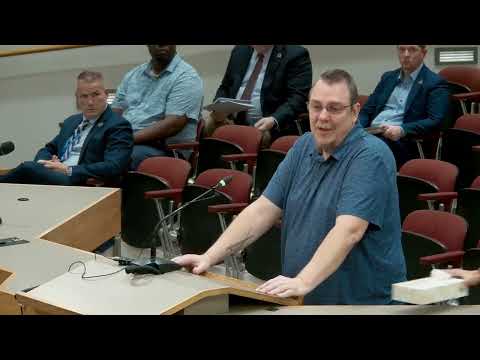
Bart Logue, Spokane’s police ombuds, told the City Council the Office of Police Ombuds handled an elevated workload in 2025 even as staff turnover continued.
"The OPO experienced turnover, but the team still handled more public contact, more review work, and more involvement in SPD accountability processes than in prior years," Logue said, and later summarized the office’s activity: certification of about 110 internal affairs investigations, roughly 120 interviews, participation in 24 SPD review boards and more than 700 meetings with the Spokane Police Department.
Logue emphasized that an increase in complaints does not automatically indicate more misconduct, noting instead that higher numbers can reflect greater public awareness and use of the office: "More complaints does not automatically mean more misconduct," he said. He also explained that individual complaints may include multiple allegations and that the office uses referrals to direct matters outside its jurisdiction to the appropriate agency.
The ombuds listed outcomes and trends: community complaints most often raised concerns about officer demeanor and an inadequate response; internal complaints were more likely to be sustained. Logue said 27 internal allegations were sustained last year and that two officers resigned before termination as a sanction could be issued.
The office issued 13 recommendations in 2025; according to Logue, Spokane Police Department responses included eight recommendations fully implemented, three in progress, one partially implemented and one not implemented — the unimplemented recommendation sought to add a community member to the use-of-force review board.
Logue also flagged an ongoing structural problem: the office lacks a clearly defined privacy wall that would provide confidential access to sensitive records and comply with CJIS requirements. He said the administration is working on a solution but the issue remains unresolved.
Separately, Logue said the office is finalizing a "closing report" on the June 11 protest response after reviewing a high volume of complaint materials, use-of-force reviews and command‑level decisions. He described that work as the heaviest lift for the office and said the report will be presented to oversight bodies and stakeholders.
Luke Jasmine, chair of the Ombuds Commission, said the commission reviewed the ombuds’ work, renewed the ombuds contract, conducted an annual evaluation and affirmed the need for stronger recommendation-tracking and clearer processes for handling complaints about the OPO itself. "Effective civilian oversight requires an independent ombuds, a committed commission, engaged community members, and a structure that supports transparency and accountability," Jasmine said.
Council members asked for additional breakdowns — for example, how many unique officers had complaints and reasons behind pursuits — and Logue directed members to data tables in the written annual report and to specific pages for outcome charts. He said the OPO will follow up with more detailed materials.
The report and the commission’s evaluation drew repeated council praise for the office’s outreach and oversight role, while members also urged faster resolution of structural constraints that hamper independent review.