Get Full Government Meeting Transcripts, Videos, & Alerts Forever!
Get email alerts on the Chickens topic
No spam. Unsubscribe anytime.
Resident urges Montrose to allow backyard chickens, offers to help enforce rules
Summary
Ashford Hellcamp and her husband urged the City Council to adopt a Minneapolis-style backyard-chicken ordinance, citing food resilience and neighborhood benefits; council members raised enforcement and lack of public support as recurring obstacles and encouraged grassroots outreach.
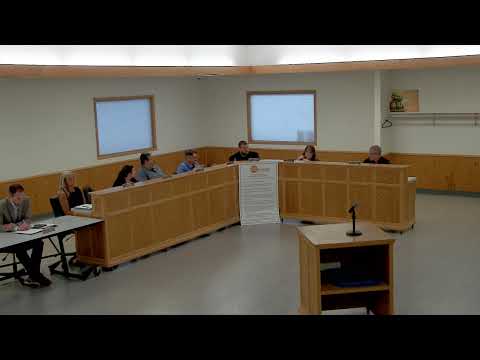
Ashford Hellcamp, a Montrose resident, told the City Council she and her husband want the city to permit backyard chickens and asked councilmembers to consider Minneapolis-style rules as a model. "I grew up on a farm... I would like to address our interest in having chickens in the City of Montrose," Hellcamp said, and later added that urban chicken ordinances can be "really well presented and thorough" for neighborhood settings.
Her husband, identified in the meeting as Travis, described keeping chickens in another city and said they are "generally pretty clean animals" and easy to care for. Hellcamp and Travis cited benefits that include home eggs, compostable manure for gardens and insect control. Hellcamp noted several other cities have moved to allow chickens and urged the council to "just give it a try," offering to volunteer to inspect coops: "I will go inspect people's chicken coops... I'll volunteer, sign me up for the chicken police." (Ashford Hellcamp, resident).
Councilmembers said the item has returned to the agenda multiple times over the years but repeatedly stalled because few residents attend public hearings in support while several opponents have spoken. The mayor summarized the council's past experience as rooted in two main barriers: "enforcement and then support," noting staff capacity to inspect private property and the resource implications of adding oversight to existing animal-control duties. Councilmembers also pointed to planning-and-zoning procedures and the need for demonstrable resident demand before moving a regulatory change forward.
Several councilmembers suggested grassroots organizing as a next step. One councilmember recommended gathering signatures and presenting clear neighborhood backing at a planning-and-zoning hearing; another said staff could review sample ordinances already in the packet. The public-comment exchange closed without a motion; Hellcamp left sample ordinances for council review and the council asked staff to include ordinance language for future consideration.
The council did not vote on a policy change at the meeting. Next procedural steps discussed were community outreach to show local support and sending any draft ordinance to the planning-and-zoning commission for formal review.