Get Full Government Meeting Transcripts, Videos, & Alerts Forever!
Get email alerts on the Data Centers topic
No spam. Unsubscribe anytime.
Residents urge Wythe County to scrutinize proposed data centers over water, noise and chemical risks
Summary
Multiple residents told the board they oppose or want stronger regulation of proposed data centers, citing disputed water-use estimates, possible PFAS contamination from cooling systems, noise, heat-island impacts and skepticism about promised jobs; speakers urged zoning, better transparency and more direct engagement with nearby communities.
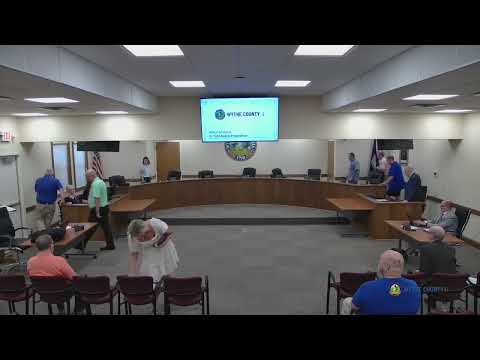
Multiple residents raised sharp concerns about proposed data-center development in Wythe County during citizens time at the June 30 board meeting, pressing the board to clarify technical data, consider zoning and consult neighbors.
"My name is John Steinberg," said John Steinberg, who identified himself as a solutions architect and recent resident. He challenged previously mentioned water-usage figures for a proposed data center and presented his own calculations. "The last meeting where I saw water usage estimates was 2,000 gallons per day. In my experience, that's wildly low," Steinberg said, later offering a range that produced "7,000 gallons per day at the low end and 350,000 gallons at the high end" based on his square-footage and per-square-foot assumptions. He also warned that high power demand associated with AI-focused data centers could raise local residential rates.
Stacy Bieber (reading remarks submitted by another resident) asked the board to revisit a May 26 vote that set a $500 application fee to establish an agricultural and forestal district; she contrasted that amount with language she found in a Fairview ordinance that cited a $20 renewal fee and called the $500 charge "preposterous," urging reconsideration and greater transparency in related JIDA meetings.
Miranda Edwards told the board she had visited proposed sites and described environmental harms she said were already visible: "It's not normal to see fish dead on river banks because the water's too dry and too hot," she said, adding that heat-island effects, noise and chemical runoff from cooling systems (including PFAS) posed risks she believed the board had not fully weighed. Edwards disputed industry job projections and urged the board to consult residents living near proposed facilities.
Board members did not take immediate regulatory action during the meeting; public comments were recorded during the citizens time portion. The record shows a mix of technical challenges (requests for concrete data on water and power use) and community-impact arguments (noise, public-health and environmental concerns). Speakers called for clearer fee policies, closer communication with regional development bodies and a review of zoning or other local controls.
The speakers identified specific data and assertions for the board to verify; staff and planning officials present said public comments will factor into ongoing planning commission reviews and future meetings.
Next steps: the board will continue its review of planning commission recommendations and may bring zoning or fee issues to a future meeting for formal consideration.