Get Full Government Meeting Transcripts, Videos, & Alerts Forever!
Get email alerts on the Sewer Rates topic
No spam. Unsubscribe anytime.
Tyngsborough officials defend three‑year sewer rate plan as costs, intermunicipal bills and aging pipes mount
Summary
Town DPW and sewer staff told the Select Board that rising intermunicipal treatment costs, higher utility and odor‑control bills, and depleted retained earnings require spreading a roughly 45% needed revenue increase across three years, producing a FY27 residential rate of about $660 and a projected FY29 rate near $873.
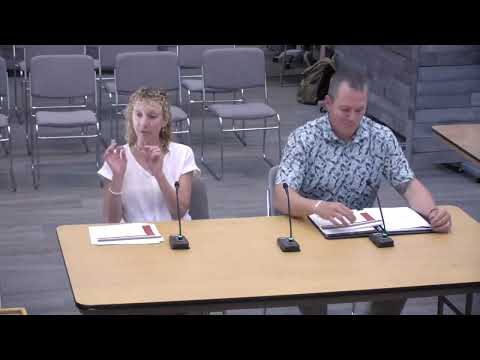
Tyngsborough Department of Public Works leaders told the Select Board that a planned, three‑year increase in residential sewer rates is necessary to cover sharply rising operating and intermunicipal treatment costs and to rebuild emergency reserves.
"Mass DOR ... considers one of their best practices ... full cost recovery," said Kathleen Kayer, the town's sewer administrator, explaining the state guideline that utilities set rates sufficient to cover operations, capital, debt and emergency reserves. Kayer said the sewer enterprise has used retained earnings for years to smooth bills but can no longer sustain that approach.
The three‑year plan spreads what staff said would have been a roughly 45% single‑year increase across fiscal 2027–29. DPW Superintendent Jake Wickens said the commission "didn't want to burden the users right on the first year," so it phased the hikes to give ratepayers time to plan. Staff said the FY27 residential rate was calculated from the FY26 budget model and came out to about $660.30 annually; by FY29 the example in the presentation showed a projected residential annual rate near $873.
Officials offered several concrete cost drivers. Kayer counted 17 municipally owned pump stations and said a single large replacement pump can cost about $80,000. She said utilities for those stations approached $100,000 in fiscal 2025 and that odor‑control measures cost about $46,000 a year. She also described intermunicipal agreements (IMAs) with Dracut, Chelmsford and Lowell that bill Tyngsborough for treatment and conveyance by flow; she said Lowell's per‑million‑gallon charge rose sharply from FY25 to FY26 and that Dracut adds roughly 15% to Lowell's rate before billing Tyngsborough.
"We don't want to have to come to the town and ask for money," Kayer said. "The sewer users should be paying for anything sewer related." She added that the commission seeks to reach an emergency reserve equal to 25% of annual O&M plus the cost of the largest capital item — staff used $150,000 as a benchmark for the latter — and estimated current retained earnings roughly in the low‑hundreds of thousands of dollars, below the target.
Board members pressed staff for detail. Selectperson Marino asked how IMA increases are calculated and whether the towns negotiate annual escalators; Kayer described metering and flow‑ratio calculations and said each neighboring town bills differently (per million or per thousand gallons) and that billing frequency also varies. Selectperson Gal noted the town held rates steady for about 14 years and observed that public attendance for the sewer commission's three prior meetings was effectively zero; Kayer confirmed she had no public attendees at those hearings.
Staff also described an inflow and infiltration (I&I) study funded largely by a congressionally directed grant (staff cited roughly an 80% federal share with a 20% local match). The study uses CCTV, smoke testing and manhole inspections to find clean water entering the sewer system; reducing I&I would lower how much Tyngsborough sends to neighboring treatment plants and could reduce future IMA charges.
Officials said residential customers will be billed at a flat annual rate (residential flat bills are split across two payments under current practice), while businesses are billed by meter. Kayer noted the town could consider quarterly billing for residential users to reduce the size of each payment if the commission approves the change.
The presentation prompted no formal vote by the Select Board; staff said commercial notices will go out in July and residential bills reflecting the new rate will appear in September (covering July–Dec) and in March (covering Jan–June).
The town continues work on an asset management plan to prioritize capital replacements and said residents seeking a deeper explanation can contact the sewer office for one‑on‑one review of the figures.
The Select Board did not take further action during the session; staff said the commission will reassess rates before any additional increases and will consider changes if costs or reserves shift materially.