Get Full Government Meeting Transcripts, Videos, & Alerts Forever!
Get email alerts on the Long Term Care Finance topic
No spam. Unsubscribe anytime.
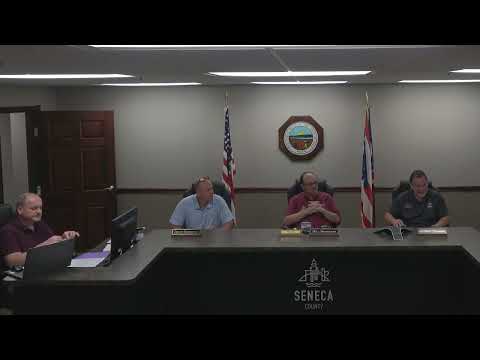
Good Shepherd Home asks Seneca County to serve as conduit for bonds to add 20 assisted‑living beds and workforce housing
Summary
A Good Shepherd Home representative asked the Seneca County Board of Commissioners to endorse conduit bond financing to refinance an existing issue and fund a roughly $3.5 million project for a 20‑bed assisted‑living unit, plus workforce housing triplexes; commissioners asked staff and bond counsel to follow up and scheduled further review.
A representative of Good Shepherd Home presented to the Seneca County Board of Commissioners seeking county endorsement to act as a conduit issuer for nonprofit bond financing to refinance existing debt and fund new construction, including a 20‑bed assisted‑living unit connected to the facility’s nursing home and nearby workforce housing.
The presenter said Good Shepherd Home is a nonprofit formed under the Church of the Brethren and has worked in the Fostoria area since 1904. “So our main project is a, a 20 bed assisted living that would be connected to our current nursing home,” the presenter said, adding that the nursing home has a 95‑bed capacity that includes a 40‑bed Alzheimer’s/dementia unit and that the dementia unit generally stays full.
The presenter described financing mechanics and the county’s role: the bank and bond counsel have proposed variable‑rate debt where, with county conduit support, the borrower’s effective premium would be reduced (the presenter said conduit financing could reduce the borrower’s share to about 75% of the premium compared with the full premium). The presenter emphasized the county would not be liable for the nonprofit’s debt: “A reminder that, although the bonds go through the county, the county is not liable for any of this debt,” the presenter said.
Project scope and timing: the assisted‑living expansion was estimated at about $3,500,000, with the presenter saying the organization hoped to begin construction in August 2026. Good Shepherd also described purchasing roughly 2.5 acres across Springville Avenue for workforce housing and planning two triplexes (2‑bed/2.5‑bath units) intended to house staff; that component was described as part of the broader financing package and was cited as an approximately $1,000,000 investment to support employee retention.
Commissioners and staff asked procedural questions about bond capacity and next steps; commissioners requested legal and bond‑counsel review and asked that the presenter coordinate with county staff (Derek and Todd were named in the transcript as contacts). One commissioner summarized next steps: obtain bond‑counsel detail, provide language to county staff for review, and return to the board agenda once materials are vetted.
Why it matters: the project would add licensed assisted‑living capacity for early‑stage dementia care in Seneca County, and the workforce housing element is intended to address local staff housing shortages that providers said affect retention. County conduit financing can lower borrowing costs for nonprofits while keeping county liability separate from the nonprofit’s debt.
The board did not take a final vote on conduit authorization at this meeting; commissioners said they would schedule follow‑up once bond counsel and county legal review the proposed package.