Get Full Government Meeting Transcripts, Videos, & Alerts Forever!
Get email alerts on the Early Childhood Education topic
No spam. Unsubscribe anytime.
Board of Public Education advisory council weighs adding numeracy to early targeted interventions, debates emergency rules
Summary
The advisory council charged by the Board of Public Education reviewed House Bill 338, which extends early targeted interventions to include numeracy, compared it to House Bill 628, considered interim emergency rules to allow immediate implementation, and identified timing and capacity concerns for districts; no formal vote was taken.
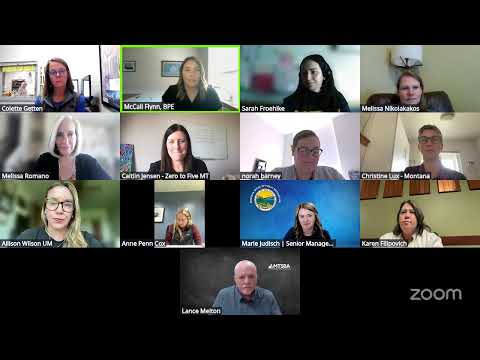
The Board of Public Education advisory council met in a public webinar to review House Bill 338 and its implications for early targeted intervention, including the bill’s new inclusion of numeracy alongside literacy and the practical steps needed for districts to evaluate and enroll children.
Caitlin Jensen, Executive Director of Certified Montana, and Rep. Melissa Romano walked the group through House Bill 338, which “mirrors” earlier literacy legislation and expands the statute so districts can screen for and provide intervention in early numeracy as well as literacy. Romano said the bill retains the three intervention components — classroom, home and a summer “jump start” — and frames the statutory goal as third-grade numeracy proficiency.
Nicole Flynn, executive director at the Board of Public Education, reminded participants that the advisory council was formally created by the board in 2023, that meetings are recorded and open to the public, and that the council’s charge includes recommending evaluation methodologies and updating administrative rules. “Because this is a formal advisory council created by the board, all of our meetings are recorded. We are open to the public. We are streaming live to YouTube,” Flynn said.
A central point of debate was timing. Lance Melton of the Montana School Boards Association flagged a key distinction between HB338 and House Bill 628: HB338 removes specific month-based limits on when evaluations may occur, allowing year-round evaluation and immediate enrollment; HB628 would permit evaluation “no sooner than five months prior to enrollment.” Melton urged the group to capture sponsor intent so rules can reflect whether evaluations can be done at enrollment or must be restricted to a prior testing window.
Melton underscored an operational constraint: “There’s no kid in the state who’s qualified for targeted numeracy. Not 1,” he said, meaning districts cannot claim funding or provide targeted numeracy services until a numeracy-specific evaluation methodology is approved and applied. That raised questions about how districts that are already full under literacy-based enrollment would manage any new qualifying process for numeracy.
Members discussed how the board handled screening tools for early literacy: rather than mandating a single test, the board maintains a list of approved, high‑quality screening tools as a safe harbor; districts may use other tools if they justify their choice to the Office of Public Instruction (OPI). Flynn reiterated that approach while the council considers whether to maintain one list or separate lists for literacy and numeracy.
Marie Judish of OPI said data collection for the current school year is ongoing and that districts are currently using an assurance box to indicate their chosen tools; OPI does not yet have an external vetting process for tools that are not already on the approved list. "We are currently in the middle of data collection for districts for the school year," Judish said, and she set a mid‑June deadline for district submissions.
Several district leaders raised implementation concerns. Laurie Baron, superintendent of Evergreen School District, and administrators from Great Falls and Livingston warned that summer jump start programs begin before July 1 and that requiring specific assessments or re‑testing with less than a month’s notice would be disruptive and could prevent districts from running jump start programs this summer. Baron said districts cannot readily reallocate staff or add classrooms on short notice and urged caution about imposing new operational burdens with minimal lead time.
To address the timing gap between a bill’s effective date and the length of ordinary rulemaking, the council discussed interim or emergency rule options under the Montana Administrative Procedure Act. Lance Melton recommended exploring temporary rules that would insert numeracy into existing rules and add a short list of approved numeracy tools as a safe harbor while a full rulemaking proceeds. Flynn said she would consult counsel and bill drafters about whether emergency or interim rulemaking is legally and practically feasible and would follow up with the council.
The council agreed on next steps: collect available assessment tools and district examples, have OPI compile data that is available, solicit input from tool vendors or technical assistance providers, and schedule an in‑person follow‑up meeting (McCall will send scheduling options). No formal motions or votes were taken during the session.
The advisory council opened the floor for public comment, saw no raised hands, and adjourned. Flynn said she would look into emergency rule options and coordinate with counsel and sponsors to clarify legislative intent before the next meeting.