Get Full Government Meeting Transcripts, Videos, & Alerts Forever!
Get email alerts on the Local Governance topic
No spam. Unsubscribe anytime.
Port Orchard council rejects censure; meeting erupts over whether Heidi Fenton’s oral resignation created a vacancy
Summary
A motion to censure Councilmember Shireen Dedmon failed after heated debate over whether Councilmember Heidi Fenton’s apparent oral resignation during an executive session created a vacancy. Fenton and residents accused the council and city attorney of bypassing public process and urged release of legal records; some warned of litigation risk.
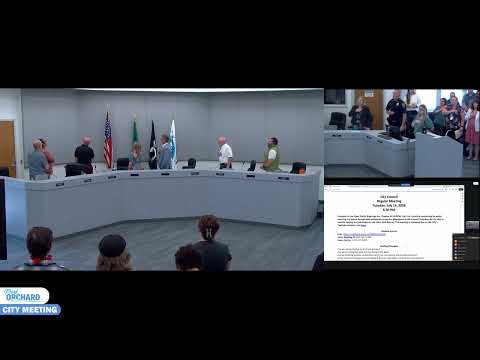
Port Orchard — The City Council voted down a motion to censure Councilmember Shireen Dedmon after an emotional meeting dominated by competing accounts of whether Councilmember Heidi Fenton’s words at a prior executive session constituted an effective resignation.
Councilmember Morrissey moved to censure Dedmon, saying Dedmon’s public statements about Fenton’s departure were “materially inaccurate” and damaged public confidence. Morrissey argued that Fenton had told colleagues “F it, I resign” during a June executive session and that council reliance on the city attorney’s legal analysis justified treating the seat as vacant. The motion was seconded and debated; the council ultimately recorded a voice vote that failed, with supporters reporting 3 yeas and 2 nays.
The debate centered on whether the statements attributed to Fenton met the legal standard for an immediate oral resignation and whether the city’s process complied with Washington’s Open Public Meetings Act (OPMA). A councilmember raising a formal point of order said the court decision Monroe v. Poulsbo shows an oral resignation must be an unequivocal, present act and noted differences between that case and the facts here. The speaker asked the city to release recordings, records and the legal analysis that led staff to treat the council seat as vacant.
Fenton, who spoke during the public-comment period, told the council she was pressured in executive session and later wrote the mayor and city attorney that she was not resigning. “I have seen no written complaint, disciplinary action, or investigation,” she said. “I was told to resign or face charges from a public works employee over a June 11 incident. I have been threatened without due process.”
Residents and outside advocates echoed calls for transparency. Independent journalist Tawny Cowan urged the council to follow OPMA standards and recommended a second legal opinion. Local resident and business owner Gary Welch warned proceeding without full legal review could expose the city to litigation and “multimillion-dollar” discovery. Robert Parker and other commenters said they planned public-records requests and legal challenges if the city cannot produce documentation showing lawful removal of an elected official.
Council supporters of staff legal advice said the city attorney provided a defensible analysis and that the council must follow counsel when interpreting statute and precedent. At least one council member who spoke in favor of accepting the attorney’s view said, “If our attorneys are wrong, they'll handle it,” and expressed confidence counsel could defend the city's approach.
The meeting record shows the council debated an appeal of a point of order, amended the agenda to add a censure item and later voted on the censure motion. The council also agreed to postpone several items to allow members time to review large documents and to schedule interviews to fill the seat on dates discussed by the body.
What’s next: Council members asked staff to provide the legal materials and recordings that led to the vacancy determination and discussed whether to pursue a public investigation. Several residents and speakers said they would pursue records and potential legal remedies if the city cannot demonstrate the action complied with OPMA and other statutory requirements.