Get Full Government Meeting Transcripts, Videos, & Alerts Forever!
Get email alerts on the Psc Merger topic
No spam. Unsubscribe anytime.
Public commenters press PSC to deny Black Hills–Northwestern merger as parties debate $10M credit and tax-asset risks
Summary
On day 4 of the Montana Public Service Commission hearing, residents and environmental groups urged denial of the proposed Black Hills–Northwestern merger over data‑center transparency and rate risks. Intervenors and the MCC defended a settlement that includes a $10 million residential bill credit but commissioners pressed witnesses about net operating losses and transition costs.
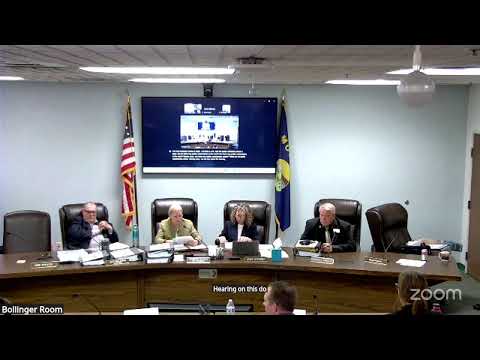
Helena, Mont. — Public commenters and intervenors squared off Friday as the Montana Public Service Commission heard the fourth day of testimony in docket 2025.10.078, the proposed merger of Black Hills Corporation and Northwestern Energy entities.
Several remote commenters told the commission they feared the deal would transfer control of Montana energy assets to a larger out‑of‑state owner and leave residents exposed to higher costs and large new data‑center loads. "This merger feels a bit like a battle between everyday people versus giant companies," said Karen Kirk of Montanans for Affordable Energy, urging commissioners to demand “more transparency” before any approval.
The Montana Consumer Counsel (MCC) presented Ralph Smith as its witness and moved three sets of his testimony into evidence. Smith said the settlement among the joint applicants, the Large Customer Group and MCC includes a $10 million residential bill‑credit for Montana customers and a package of conditions intended to preserve Montana ratepayer protections. "The settlement includes a number of conditions," Smith said on the record, and he recommended approval of the transaction subject to those terms.
But intervenors and several commissioners pushed back on how benefits were calculated. Counsel for 350 Montana, Monica Tranel, pressed Smith on publicly stated estimates of system‑wide synergies in the $48 million–$70 million range and whether those figures applied to Montana customers. Smith said the public numbers reflected combined‑company estimates before “costs to achieve” are deducted and that the net benefits to the Montana utility are smaller and documented in confidential materials.
A recurring point of contention was the treatment and valuation of net operating losses (NOLs), a tax attribute that can affect the combined organization’s cash flow. In recent testimony the company disclosed updated NOL figures; Northwestern witness Crystal Lael told the commission that much of the tax information also appears in routine SEC filings and 10‑Ks but acknowledged updated responses were provided to the PSC on May 11. Critics, including 350 Montana, said the differences in numbers between early data‑responses and later filings raise questions about what the commission and the public have been given to review.
"If they monetize [NOLs] more quickly as a result of consummation, those benefits should be accounted for and provided back to Montana utility ratepayers in an appropriate manner in the utility’s next rate case," Lael testified. She also reiterated that ring‑fencing and other conditions in the settlement are intended to prevent shareholders from charging Montana customers for transaction costs incurred prior to consummation.
350 Montana economists and former regulators argued the record lacks enforceable, quantified protections on how post‑merger benefits and costs would be allocated, and they recommended denying approval until more specific tariffs, integration plans and interconnection agreements are final. Tanya Bodell, an expert for 350 Montana, said the $10 million credit is the only unequivocal, public Montana benefit in the record and warned that tax attributes and transition costs could shift value to shareholders rather than captive customers.
Joint applicants’ counsel said the PSC’s job is narrow: to decide whether the transaction will cause harm under the public‑interest standard. They emphasized the settlement’s protective terms, the preserved PSC authority over the Montana utility and the immediate $10 million residential fund. "The commission will continue to regulate 100% of the Montana utilities," joint‑applicants counsel said in closing.
Commissioners used the hearing to probe specifics — asking witnesses whether merger savings were one‑time or ongoing, how transition costs would be treated, whether Montanans would retain meaningful control over resources such as the Colstrip shares and how data centers would be managed under any new large‑load tariff. The PSC also admitted contested intervenor exhibits that place the merger in the broader regulatory context of the IRP, the large‑load tariff, and Colstrip planning.
No vote was taken Friday; the commission set a post‑hearing briefing schedule. Joint applicants will file opening briefs by June 5, intervenors’ responses are due July 2, and joint applicants’ reply briefs will be due July 13. The commission’s official record remains docket 2025.10.078.